HL | Culture and Influence
Beyond Success: What Comes Next?
Dr. Betty® Uribe’s ELEVATE program brings accomplished women together to examine leadership, purpose and what comes after professional success.
Photos and article by
Richard Sandoval
 n a Saturday at Pepperdine University, eight women stood before an audience to share presentations representing the culmination of months of work as participants in Dr. Betty® Uribe’s ELEVATE program. Their subjects were as varied as their professional and personal experiences. There were conversations about leadership and artificial intelligence, reflections on childhood and family, and candid stories about navigating personal challenges, loss and change. One participant spoke about overcoming ADHD and the challenges associated with preparing and delivering presentations.
There was no single definition of leadership offered that afternoon. Instead, each woman approached the subject through the experiences that had shaped her, providing a glimpse into not only what she had learned through the program, but also what she had learned about herself.
HL Media Network was invited to document the final presentations and graduation ceremony. As we recorded the participants and listened to their stories, another part of the experience became increasingly interesting. These were not women at the beginning of their professional journeys searching for their first opportunity. They were educated and accomplished women business owners, managers and professionals who had already assumed significant responsibilities within their respective careers.
Yet each had made an intentional decision to invest months of her time, along with the financial commitment required to participate in an executive development program, to become a better communicator and leader.
That decision may say as much about leadership as anything presented from the stage.
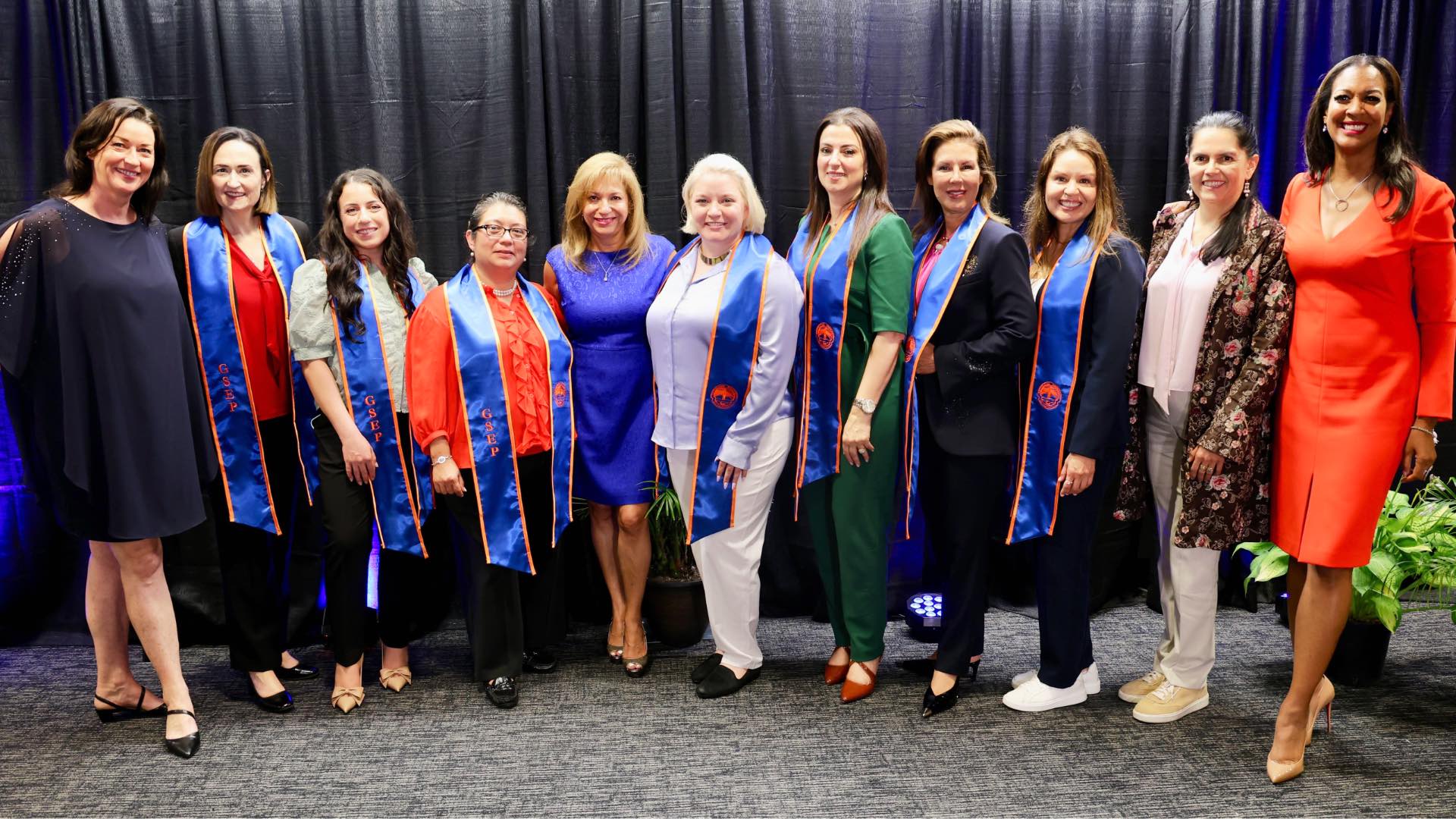
ELEVATE participants and program leaders gathered at Pepperdine University in Malibu to celebrate the completion of the program. Pictured: Stephanie Paul, Maggie O’Sullivan, Diana Jundi, Teresa Razo, Dr. Betty® Uribe, Carolyn Ebersole, Lina Safa, Marisa Sato, Maryl Petreccia, Carolina Chavez and Dawn Robinson.
Creating the Conditions to ELEVATE
For Dr. Betty® Uribe, the program grew from a question she says she has spent much of her life studying: What causes human beings to transcend and how do we create the conditions for that to happen?
Throughout her career working with accomplished leaders and organizations, Uribe says she repeatedly observed that sustainable success begins with alignment understanding who you are, what you value and what you uniquely bring to the world, and then allowing those principles to become the foundation from which you lead.
“I developed ELEVATE to give accomplished leaders space to step away from external demands and examine their lives and leadership more deeply,” Uribe explained.
The program was designed to address a broad range of areas affecting modern leadership, including values, identity, strengths, trust, relationships, negotiation, executive presence, communication, storytelling, branding, technology and artificial intelligence, strategy and legacy. Importantly, Uribe says the objective is to move beyond simply acquiring knowledge and toward putting that knowledge into practice.
“My hope was that each leader would leave with greater clarity about who they are, what they uniquely bring to the world, and how they want to use their influence in this next season of life.”
That idea the next season was particularly relevant as we listened to the women present.
The Investment in Yourself
Success has an interesting way of changing the questions we ask ourselves. Early in a career, the goals can appear relatively straightforward: find an opportunity, develop experience, earn a promotion, build a business or establish yourself professionally. Eventually, however, many accomplished professionals reach a point where the next move is less obvious.
The skills that helped someone become a successful manager may not necessarily be the same skills required to become an executive vice president. Building a successful business does not automatically prepare its founder to lead a significantly larger organization. Professional knowledge and experience can open doors, but increased responsibility brings new expectations surrounding communication, negotiation, decision-making, strategic thinking and leadership.
Throughout the ELEVATE presentations, we heard a great deal about what the participants had experienced and what they had discovered about themselves. There were moments of vulnerability and stories of perseverance. Some reflected on difficult personal chapters, including divorce, the death of loved ones and periods when life’s circumstances required them to regain their focus.
Their stories were reminders that professional development rarely occurs independently of everything else happening in someone’s life. Leadership is shaped by all of it.
Uribe describes one of the most significant outcomes of the inaugural ELEVATE cohort as “clarity accompanied by agency.”
“These leaders entered ELEVATE already accomplished,” she said. “Through the experience, they became more intentional about how they wanted to lead, make decisions, communicate, negotiate, build relationships, and invest their time.”
Their reflection papers and final presentations, according to Uribe, demonstrated greater clarity surrounding values and identity, stronger executive presence and communication, increased confidence in negotiation and decision-making, and a greater ability to recognize both patterns that needed to be released and opportunities worth pursuing.
That last point deserves attention.
Confidence at this stage of a professional career isn’t simply the ability to deliver a presentation or speak comfortably before an audience. At increasingly higher levels of leadership, confidence can mean trusting your judgment when the consequences of a decision become larger. It can mean expressing an opinion in a room filled with accomplished people, pursuing an executive position before someone else tells you that you are ready, expanding a business beyond its comfortable boundaries or recognizing that years of experience have earned you a place at the table.
The women participating in ELEVATE had already demonstrated that they possessed many of the tools necessary to succeed. Their professional accomplishments were evidence of that. Their participation suggested something equally important: successful people can recognize that there are still tools they need to acquire.
From Success to Stewardship
Something else happened as the cohort progressed. Uribe saw the participants begin thinking beyond their individual success.
She points to the trust developed among the women as an important part of the experience. That community created an environment for vulnerability, accountability, encouragement and learning that extended beyond the formal curriculum.
More significantly, she said their thinking began shifting toward stewardship and legacy.
“What have I been entrusted with? Who can benefit from what I know? What do I want my leadership to produce beyond my own success?”
For Uribe, that is the point where personal transformation has the potential to become something larger.
“That is where transformation becomes multiplication.”
It also presents an interesting evolution in the way we think about professional success. At some point, the question may no longer simply be how much someone can accomplish personally. The question becomes what their experience, knowledge, relationships and influence can create for other people.
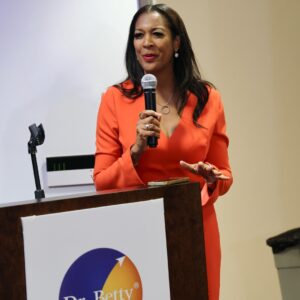
Dawn E. Robinson, MBA, served as Master of Ceremonies for the ELEVATE graduation ceremony at Pepperdine University in Malibu.
Graduation Is a Milestone, Not an Ending
As the presentations concluded and the women were recognized for completing the program, I found myself thinking less about graduation and more about what happens afterward.
It turns out Dr. Betty® was thinking about the same thing.
“The inaugural cohort taught us something important: ELEVATE cannot end at graduation,” she said.
Uribe is now developing ELEVATE as what she describes as an ecosystem—a continuum intended to support leaders through discovery, executive development, application, accountability, integration and eventually legacy.
The journey begins with Discovery Foundations™, where participants examine their values, strengths, identity, purpose and areas requiring greater alignment. Leaders can then move into the Executive Leadership Master Certification™, an intensive experience incorporating values-centered leadership, negotiation, executive presence, storytelling and branding, trust and belonging, strategic thinking, ethical AI and real-world application.
Graduates can continue their development through the Impact Circle™, designed around ongoing reflection, accountability, peer learning and leadership development. Uribe is also building Integration & Expansion™, which will include immersive global experiences intended to deepen the work by removing participants from the pressures and routines of everyday life.
Over time, selected graduates may also return as Fellows, faculty collaborators, mentors or understudies, allowing the lessons and methodology to move from one generation of participants to another.
This begins to redefine what graduation represents.
Instead of being the conclusion of an educational experience, graduation becomes one marker along a much longer leadership journey.
What Comes Next?
That idea also raises a broader question about women and leadership.
For decades, HL has had the opportunity to meet, interview and recognize accomplished women across numerous industries and at virtually every stage of their careers. Many no longer need someone to convince them that they are capable. Their résumés demonstrate their abilities. They have built companies, managed employees, led organizations, raised families, survived difficult circumstances and established themselves professionally.
For this group of women, the conversation may need to evolve beyond simply encouraging them to succeed. The more interesting question is what they need to reach the next level.
For one woman, that may mean stronger executive communication skills. For another, it could be financial education, understanding artificial intelligence, developing strategic relationships, learning how to negotiate at a higher level or preparing to serve on a corporate board. A successful entrepreneur may need to understand capital and scaling. An experienced corporate executive may need greater visibility and relationships outside her organization before she can realistically compete for a CEO position.
There isn’t one missing skill because there isn’t one definition of what comes next.
Perhaps that is one of the most valuable lessons from spending an afternoon listening to the ELEVATE participants. Professional development doesn’t end when someone becomes successful. In many respects, success simply creates another set of questions.
Dr. Betty® sees an even longer horizon for the program. While the graduation HL documented predominantly featured women, ELEVATE itself is not exclusively a women’s leadership program. The founding cohort included one male participant who joined from Croatia, and Uribe says the next cohort, planned for this fall, will bring together a more balanced representation of accomplished women and men.
“It was an extraordinary honor to lead this founding cohort of remarkable leaders,” Uribe said. “There was something very special about watching this group challenge themselves, support one another, and ultimately discover that ELEVATE is about far more than professional success—it is about who we become, the impact we are called to make, and the legacy we are leaving behind for a time we will never see.”
As she looks toward the next cohort, Uribe believes bringing together a broader range of perspectives, experiences and leadership styles will add another dimension to the experience. Her larger vision is for ELEVATE to eventually become a global community of values-centered leaders who understand leadership as stewardship. Success, she believes, should ultimately be measured by what happens beyond the classroom: the organizations participants strengthen, the people they develop, the families and communities they influence, the decisions they make when nobody is watching and the opportunities they create for those who follow.
“That is what I believe ELEVATE can become: transformation that multiplies from one leader to another, to an organization, to a community and ultimately across generations.”
At HL, we have always been interested in asking people a deceptively simple question: What’s next?
For these eight women, we now have another reason to ask it.
They invested in themselves. They challenged themselves. They completed ELEVATE. Their graduation at Pepperdine University marked an accomplishment worth celebrating, but both the experience we witnessed and Dr. Betty® Uribe’s vision for the program suggest that graduation isn’t where this story ends.
It may be where the more interesting story begins.
Now we look forward to discovering what they do next.
Exclusive photos taken at the ELEVATE graduation ceremony at Pepperdine University in Malibu. Photos by HL Media Network.

EDITOR NOTES
HL Media Network was invited to document the ELEVATE final presentations and graduation at Pepperdine University in Malibu. What began as an opportunity to capture an important milestone became an opportunity to listen to accomplished women sharing their experiences, challenges and ambitions for what comes next.
Their stories reinforce our belief that leadership development does not end with professional success. We look forward to following their journeys and continuing the conversation about the skills, relationships and opportunities that help accomplished women reach their next level.