
HL BUSINESS
The American Consumer: One Economy, Many Stories
Beyond the trillion-dollar headlines, HL explores the people, purchasing decisions and financial realities shaping America’s economic future.
Article by
Richard Sandoval
 s Hispanic Heritage Month comes to a close, new economic research offers another reminder of the growing influence of the U.S. Hispanic consumer. The numbers are impressive. But after nearly three decades of documenting the stories of Hispanic Americans, I’ve come to believe there is a more important conversation we should be having.
Who are the people behind these numbers?
Beyond the Trillion-Dollar Headlines
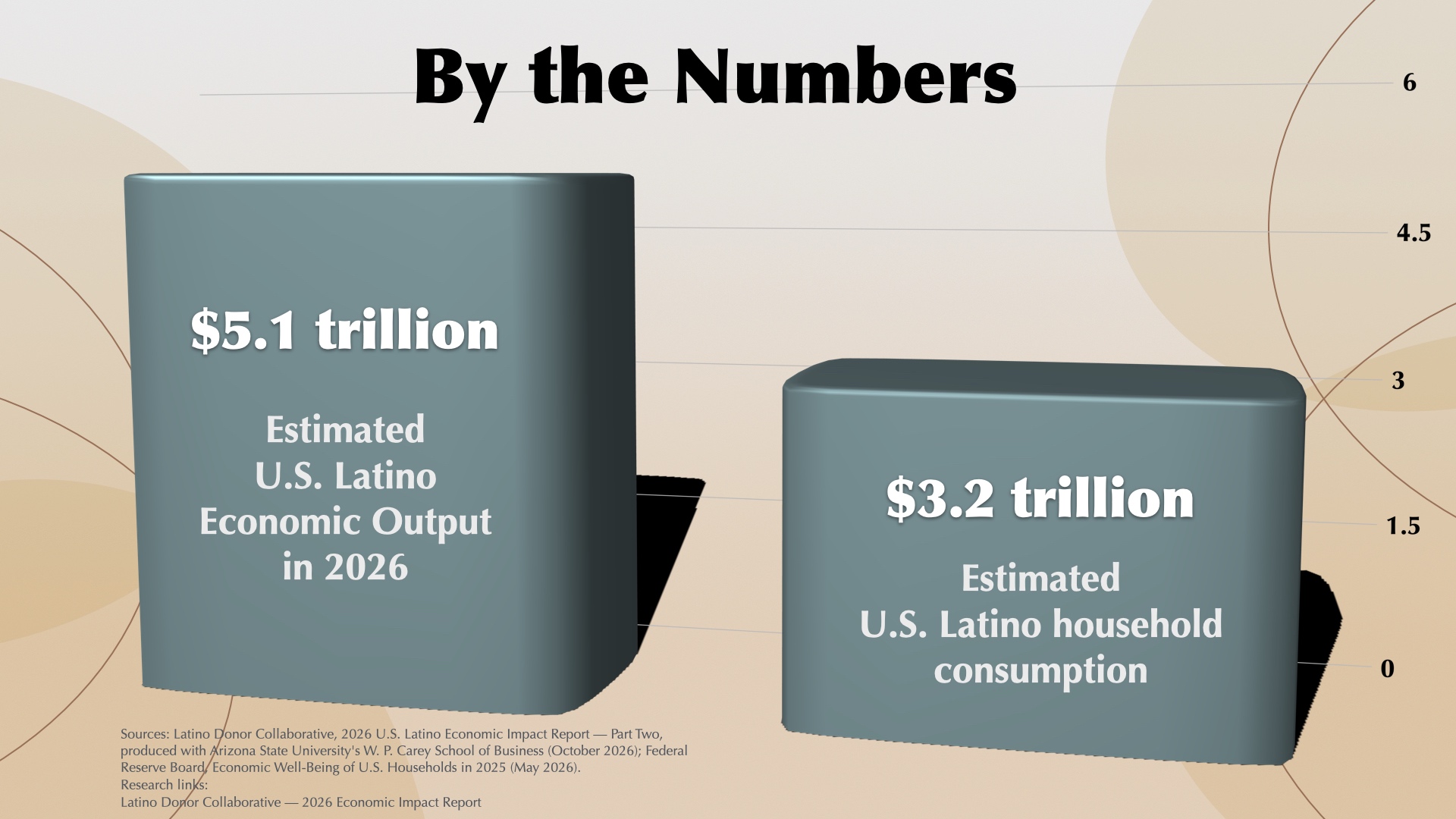
In October 2026, the Latino Donor Collaborative released new research, produced in partnership with Arizona State University’s W. P. Carey School of Business, estimating the U.S. Latino economy at $5.1 trillion in economic output for 2026, with household consumption estimated at $3.2 trillion.
These are two different economic measurements, but both reinforce the significant contributions Hispanic Americans make to the nation’s economy. For businesses, understanding these economic trends is essential.
We regularly examine industries such as agriculture, technology, healthcare and aerospace to identify growth opportunities. We study consumer behavior, income, age, geography and professional backgrounds to better understand who purchases our products and services.
Why should understanding demographic communities be any different?
Market segmentation is not about separating people. It’s about understanding the economic behaviors, circumstances and opportunities within a larger marketplace.
One Market, Different Economic Realities
Over the past year, through our HL | Milestone Series and participation in national business conferences, I’ve observed a recurring theme. Research continues to document the expanding economic influence of Hispanic Americans.
Yet behind these economic projections are people living dramatically different financial experiences.
Consider a family carefully managing its grocery budget, struggling with rising housing expenses or relying on credit to cover everyday necessities.
Now consider a successful entrepreneur purchasing luxury goods, an executive investing in real estate or a family preparing to transfer accumulated wealth to the next generation. Both contribute to the American economy. Both may be Hispanic. But their financial circumstances, purchasing motivations and priorities are entirely different.
According to the Federal Reserve’s 2026 report on household financial well-being, 58% of American adults said price increases had negatively affected their finances during 2025.
Economic influence does not necessarily mean financial security.
Sources: Latino Donor Collaborative, 2026 U.S. Latino Economic Impact Report — Part Two, produced with Arizona State University’s W. P. Carey School of Business (October 2026); Federal Reserve Board, Economic Well-Being of U.S. Households in 2025 (May 2026).
Research links:
%
U.S. adults who said higher prices negatively affected their finances in 2025
Understanding the People Behind the Market
The U.S. Hispanic consumer is not defined by one individual profile.
Hispanic Americans represent different national origins, generations, professions, income levels, cultural identities and personal experiences. They include business owners, healthcare professionals, educators, executives, skilled workers, students and retirees.
They include Afro-Latinos, multiracial families, immigrants and Americans whose families have lived in this country for generations.
Some are building wealth for the first time. Others are managing wealth accumulated over several generations.
Their purchasing decisions may be influenced by price, quality, convenience, family recommendations, professional relationships, cultural experiences or personal aspirations.
Understanding these differences matters because the American Hispanic consumer is, first and foremost, an American consumer.
The Opportunity for American Business
For brands seeking growth, demographic research provides valuable market intelligence. But understanding purchasing power alone is not enough.
What motivates someone to select one brand over another? How do personal relationships influence purchasing decisions? Why are some consumers investing in luxury experiences while others struggle to afford everyday necessities?
These are questions worth exploring.
At HL, we’ve spent nearly 30 years introducing audiences to the entrepreneurs, professionals, executives, families and community leaders whose stories help explain the changing American economy.
Their experiences provide something economic statistics cannot fully capture: the human perspective.
As we introduce The American Consumer, a new HL editorial series, we’ll examine the relationships between money, business, education, wealth, consumer behavior and opportunity.
Because the American consumer is not defined by a single demographic category.
It is a diverse population whose ambitions, experiences and financial decisions shape one interconnected economy.
Understanding the differences helps businesses identify opportunities. Understanding the people behind those differences helps us see the bigger picture.
More from The American Consumer to follow . . .

EDITOR NOTES
The American Consumer: One Economy, Many Stories introduces a new HL | Money, Finances & Wealth editorial series examining the people, purchasing decisions and financial realities shaping America’s economy.
Drawing on nearly three decades of original reporting, interviews and firsthand experiences, HL will explore the diverse economic circumstances of American consumers from the challenges of everyday household spending to entrepreneurship, education, luxury markets, homeownership and generational wealth.
Our goal is to move beyond economic headlines and demographic statistics to better understand the people behind the numbers, the decisions influencing their financial lives and the opportunities emerging across the American marketplace.
The American consumer is the market. Understanding the people who shape it is our story.