
HL | COMMUNITY
A New Era of Leadership | Making History
Historic firsts, changing expectations, and the people shaping America’s future.
Article by
Richard Sandoval
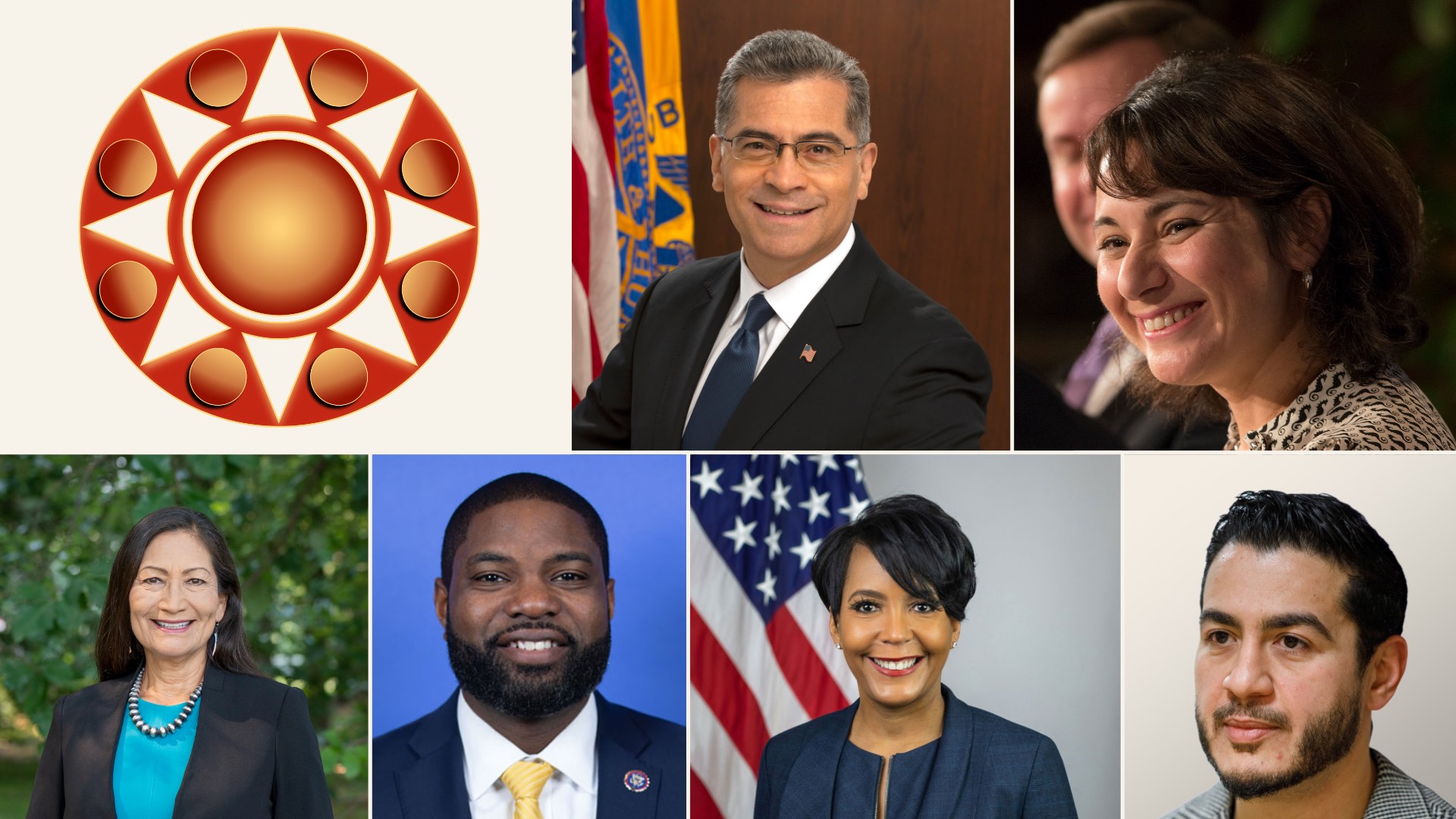
Top row, left to right: Xavier Becerra (California) and Gina Hinojosa (Texas). Bottom row, left to right: Deb Haaland (New Mexico), Byron Donalds (Florida), Keisha Lance Bottoms (Georgia), and Abdul El-Sayed (Michigan).
Their historic elections reflect a changing America and a new chapter in representation, public service, and leadership.
 here are moments in our nation’s history when we recognize that something significant is happening around us. Sometimes we don’t fully appreciate their importance until years later, when we look back at the people, events, and decisions that helped shape our future.
The November 3, 2026, election may be remembered as one of those moments.
Across America, voters elected a remarkable collection of leaders who made history. For some, the victories represented the culmination of years of public service. For others, they marked the beginning of a new chapter in their professional and personal journeys.
Their backgrounds, experiences, and perspectives are different. So are the communities they were elected to represent.
Yet their historic accomplishments share something important: they reflect an evolving America and changing expectations about leadership, representation, and the future.
As we recognize these milestones, there is another question worth considering.
What comes next?
A Historic Night Across America
In California, Xavier Becerra became the first Latino elected governor in the state’s history. His victory carries particular significance in a state where Latino communities have helped shape the economy, culture, and identity for generations.
There is an interesting historical distinction. California’s first Latino governor was Romualdo Pacheco, who assumed office in 1875 after serving as lieutenant governor. More than 150 years later, Becerra became the first Latino elected directly to that position.
- In Texas, Gina Hinojosa made history as the first Latina elected governor. A former school board member and state legislator, Hinojosa entered the race facing a well-established incumbent with considerable financial resources.
- Her victory represents another milestone in a state where Latinos make up a significant share of the population and contribute to virtually every sector of its economy. But the historic achievements extended well beyond California and Texas.
- In Georgia, former Atlanta Mayor Keisha Lance Bottoms became the first Black woman elected governor in American history.
- In neighboring Florida, Byron Donalds became the state’s first Black governor, marking another significant achievement in a state with one of the nation’s largest Latino populations.
- New Mexico elected Deb Haaland, a member of the Laguna Pueblo, as the nation’s first Native American woman governor.
- In Michigan, Abdul El-Sayed, a physician and former Detroit public health official, became the first Muslim elected to the United States Senate.
- Minnesota elected Peggy Flanagan, a member of the White Earth Band of Ojibwe, as the first Native American woman elected to the U.S. Senate.
Other milestones were recorded in Nevada, Wisconsin, Nebraska, New York, and additional states, where voters elected individuals who broke barriers involving race, ethnicity, gender, religion, and identity.
Taken together, these victories offer a remarkable snapshot of American leadership in transition.
They also remind us that representation is not limited to one community, one region, or one political perspective.
The People Behind the Victories
Every election result has a story behind it.
Some candidates arrive with decades of public service and established relationships. Others enter a campaign with limited name recognition, fewer financial resources, or little support from the institutions traditionally associated with political campaigns.
Consider the differences between California and Texas.
Becerra entered his campaign with extensive experience in Congress, state government, and the federal Cabinet. Hinojosa, while an experienced public official herself, faced a substantial fundraising disadvantage against an incumbent governor.
In Michigan, El-Sayed emerged from a competitive primary after facing significant opposition spending. His campaign emphasized economic concerns, healthcare, and the influence of money in politics.
These were very different paths to public office.
Yet each candidate had to introduce a message, establish connections, and persuade voters to place their confidence in them.
As someone who has experienced running for public office, I appreciate that an election is about more than campaign organizations, advertising, or financial resources.
People want to understand who you are, what you believe, and whether you recognize the concerns affecting their lives.
A candidate’s personality, experiences, and ability to communicate can become important parts of that connection.
Of course, campaigns are complicated, and institutional support can make a substantial difference. No single explanation accounts for every victory, but these elections offer an opportunity to look beyond campaign spending and political machinery to discover the individuals behind the headlines.
For those who have considered becoming involved in their communities, whether through public service, education, business organizations, or neighborhood leadership, these stories are reminders of the many ways people can participate in shaping the future.
One Nation. Many Communities.
Something else deserves our attention.
The changing face of American leadership is occurring in states with very different histories, demographics, and economic characteristics.
California, Texas, Florida, and New York are home to the nation’s largest Latino populations. But significant Latino communities also live in Illinois, Arizona, New Jersey, Colorado, Georgia, North Carolina, Washington, Michigan, and throughout the country.
These communities are not simply demographic statistics. They represent business owners, entrepreneurs, educators, professionals, workers, families, and consumers participating in the American economy.
The election of Michigan’s first Muslim U.S. senator, for example, is historically significant in its own right. But his responsibility extends to everyone in Michigan, including its growing Latino population.
The same is true in Florida, where the election of the state’s first Black governor carries historical significance while raising questions about the future of a state with millions of Latino residents and in Georgia, the election of the nation’s first Black woman governor takes place in a state experiencing substantial demographic and economic change.
These examples illustrate something important.
Our communities do not exist independently of one another.
We participate in the same economy, navigate many of the same institutions, and share concerns about the opportunities available to future generations.
Our cultural backgrounds and experiences may differ, but the decisions made by elected representatives can affect us all.
There is room to celebrate those differences while recognizing the responsibilities and interests we share.
The Economy: Expectations Beyond the Election
Throughout 2026, Hispanic Lifestyle has been examining the American consumer and the changing economic landscape.
Our recent editorial themes, The American Consumer: One Economy, Many Stories and The Economy: Lessons in Building Wealth, explored a familiar contradiction.
Americans hear about economic growth, business success, investment opportunities, and financial markets reaching new milestones.
Yet many households and small business owners continue to experience financial pressures involving housing, food, energy, healthcare, and the everyday cost of living.
Those concerns were evident before the election.
An October 2026 Pew Research Center survey found that 86% of Latino registered voters considered the economy very important to their congressional vote. Housing, energy, food, and healthcare costs were among their leading concerns.
These are not issues exclusive to one community.
For a small business owner, rising costs may affect the ability to hire employees, expand operations, or invest in new equipment.
For a family, housing affordability may determine whether homeownership remains achievable.
For a young professional, decisions about education, employment, and financial stability can influence where and how they build their future and for established entrepreneurs, the conversation increasingly extends beyond building a successful business to creating personal financial security and generational wealth.
These are among the practical realities that elected leaders inherit when they take office.
The challenge is not simply to acknowledge economic concerns during a campaign. It is to understand how government decisions influence the opportunities and financial well-being of the people they represent.
Tax policy, public education, infrastructure, healthcare, housing, and access to business capital are not abstract political discussions.
They have consequences for individuals, families, businesses, and communities.
Representation Comes With Responsibility
There is something worth celebrating when an individual becomes the first person from a particular background to hold an elected office.
Historic firsts remind us how much our nation has changed and how many barriers have been overcome.
They can also inspire individuals who may never have imagined themselves occupying positions of leadership, but representation alone does not guarantee effective governance.
Sharing a cultural heritage with an elected official does not mean we must agree with every position they take.
Nor should elected representatives expect automatic support because of their race, ethnicity, gender, religious background, or personal history.
Trust must be earned.
Leadership must be demonstrated and accountability must extend beyond election season.
A governor elected in Texas is responsible for serving Texans. A senator elected in Michigan represents the people of Michigan. The same principle applies to every officeholder, from local school boards and city councils to Congress and the highest levels of government.
Their responsibility is not limited to the people who voted for them.
It extends to everyone they were elected to serve.
For Hispanic Lifestyle, recognizing historic achievements is consistent with our longstanding commitment to profiling people who make a difference.
That recognition is not an endorsement of an individual’s policies or political beliefs.
It is an acknowledgment of a milestone and an opportunity to better understand the person, the communities they represent, and the decisions that will follow.
Living Through History
For nearly three decades, Hispanic Lifestyle has documented the journeys of entrepreneurs, business owners, community leaders, and individuals whose accomplishments have influenced the world around them.
During that time, we have witnessed significant changes in the visibility, influence, and opportunities available to communities across America.
We have seen new generations of professionals enter industries once considered difficult to access.
We have documented entrepreneurs building businesses, creating employment opportunities, and investing in their communities and we have shared the stories of people who believed their ideas, experiences, and determination could make a difference.
Public service is another expression of that commitment to participation.
Not everyone will seek elected office, and there are many meaningful ways to contribute.
For those who disagree with a policy or believe their community deserves greater attention, civic engagement offers opportunities to ask questions, communicate with elected representatives, participate in public discussions, and advocate for change.
Our democratic institutions depend on informed participation, thoughtful disagreement, and the willingness to remain engaged beyond Election Day.
As we reflect on November 3, 2026, we should recognize the significance of the historic firsts that occurred across America.
We should also remember that the people behind those victories have been entrusted with responsibilities extending far beyond the circumstances of their elections.
There will be challenges, disagreements, difficult decisions, and opportunities ahead.
Some promises will be fulfilled. Others will encounter obstacles. The consequences of decisions made in the years ahead will ultimately become part of the historical record.
We are living through a period of change, and we may not yet fully appreciate its significance but one thing is certain.
History will remember who broke barriers. The future will reveal what they did with the opportunity.
Sources & Editorial References
This article draws upon election reporting, historical records, demographic research, and public opinion studies. Sources include:
- Associated Press — November 2026 election results and historic victories, including the election of Gina Hinojosa as Texas’s first Latina governor.
Associated Press election coverage - Los Angeles Times — Xavier Becerra’s election as California’s first directly elected Latino governor. November 3, 2026.
California’s historic gubernatorial election - National Public Radio (NPR) — Historic gubernatorial elections, including achievements in Georgia, Florida, and New Mexico. November 4, 2026.
Governors who made history - CNN — National reporting on historic firsts in the 2026 elections, including congressional and statewide offices. November 4, 2026.
The historic firsts of the 2026 election - Pew Research Center — The Economy Is the Top Issue for Latino Voters in the 2026 Midterms. October 16, 2026.
Latino voters and economic priorities - U.S. Census Bureau — QuickFacts demographic data, including Hispanic and Latino population estimates across the United States.
U.S. Census QuickFacts - National Governors Association — Historical biography of Romualdo Pacheco, California’s first Latino governor, who assumed office in 1875.
Governor Romualdo Pacheco

EDITOR NOTES
For nearly three decades, HL has had the privilege of sharing stories about individuals whose determination, experiences, and contributions have helped shape our communities.
The historic elections of November 3, 2026, offer another opportunity to recognize individuals who are making history while reflecting on the changes taking place across America.
Our interest is not in promoting political parties or candidates. We believe in examining public policy, understanding how government decisions affect families and businesses, and encouraging informed civic participation.
As a former candidate for public office, I appreciate the personal commitment involved in seeking the trust of voters. I also believe that earning their vote is only the beginning. Maintaining their confidence requires accountability, meaningful engagement, and a commitment to public service.
We can celebrate historic achievements without agreeing with every position an elected official takes.
Our responsibility as storytellers is to recognize these moments, provide context, and continue asking the questions that matter to the communities we serve.

I welcome your thoughts, ideas, and suggestions for future stories. Whether it’s a personal experience, an inspiring individual, or an important issue affecting our communities, I’d like to hear from you.
Email me at RDS@HispanicLifestyle.com, connect with @HLTV on Instagram, or follow Richard Sandoval on LinkedIn.
Let’s keep the conversation going.