The Sleeping Giant Has Awakened

The Sleeping Giant Has Awakened

The Sleeping Giant Has Awakened

The U.S. Hispanic Market Begins to Flex Its Muscles and Stretch Its Influence

By HL | Culture & Influence, Richard Sandoval

For decades, the U.S. Hispanic market was described as emerging, promising, or one to watch. Those labels no longer apply.

What we are witnessing today is not emergence it is arrival.

Across business, culture, media, and consumer spending, U.S. Hispanics are no longer waiting for permission to influence the mainstream. They are shaping it through purchasing power that rivals entire national economies, entrepreneurial momentum transforming local markets, and cultural authority redefining what America watches, listens to, eats, and aspires to.

The sleeping giant has awakened.

From Demographic to Economic Force

The U.S. Hispanic population now exceeds 63 million people, representing nearly one in five Americans. But population alone does not explain the shift underway.

What matters is economic gravity.

U.S. Hispanic buying power now surpasses $2 trillion annually placing it among the world’s largest economies if measured independently. That spending stretches across housing, automotive, travel, financial services, healthcare, education, luxury goods, and digital media.

Equally important is how that spending is deployed. Hispanic consumers today are increasingly intentional rewarding brands, institutions, and platforms that demonstrate understanding, respect, and long-term commitment.

HL Perspective

A Question Asked in 1997, Answered Today

When Hispanic Lifestyle launched in 1997, the caption on our very first cover asked a simple but uncomfortable question:

“Are Hispanic consumers taken for granted?”

Inland Empire Hispanic Lifestyle Magazine Cover – 1997

At the time, the U.S. Hispanic market was often described as emerging or  as the “sleeping giant.” The phrase acknowledged a growing population, rising buying power, and a critical labor force. But it also revealed a deeper truth: our community was recognized in theory, yet rarely treated with urgency or respect in practice.

Nearly three decades later, that question has answered itself.

The U.S. Hispanic market has grown into a $2 trillion economic force, become a majority population in multiple states, and emerged as one of the most influential drivers of American culture and commerce. What was once framed as potential is now power.

In a time marked by national frustration and uncertainty, the Super Bowl halftime moment featuring Bad Bunny felt deeply symbolic. What some labeled controversy became education. Millions were reminded that Puerto Rico is part of the United States, that Spanish is a domestic language spoken by millions of Americans, and that Hispanic culture is not adjacent to the mainstream it is embedded within it.

The sleeping giant did not wake up that night.

It simply reminded the country that it has always been here building, contributing, and influencing.

The Rise of the Affluent U.S. Hispanic Consumer

One of the most underreported dynamics in today’s economy is the rapid growth of affluent Hispanic households.

Latinas and Latinos are increasingly represented among:

  • Six-figure household incomes
  • Business owners, investors, and senior executives
  • Competitive homebuyers in urban and suburban markets
  • Consumers of premium, luxury, and experience-driven products

This is largely earned wealth, built through entrepreneurship, education, and multigenerational sacrifice. With that wealth comes a shift in mindset from access to agency, from visibility to ownership, and from consumption to legacy.

Brands still relying on outdated assumptions about price sensitivity or entry-level positioning are already behind.

Culture as an Economic Engine

Culture has always been the connective tissue of the Hispanic community. Today, it has become a powerful economic lever.

Hispanic influence is unmistakable across:

  • Music and live entertainment
  • Film, streaming, and bilingual storytelling
  • Food, hospitality, and experiential dining
  • Fashion, beauty, and lifestyle branding
  • Social platforms where culture travels faster than advertising

What has changed is control. Hispanic creators, founders, and executives are no longer just contributors they are owners, investors, and decision-makers.

Influence has moved upstream.

The Super Bowl Moment: When Culture Moves Markets

The Super Bowl has long been America’s biggest shared cultural moment. What stood out this year was not just viewership, but who activated around it.

Bad Bunny

Bad Bunny’s presence connected directly with U.S. Hispanic audiences sparking watch parties, family gatherings, social engagement, and a surge in digital conversation. Streaming activity spiked. Spanish-language and bilingual content surged in visibility. Communities turned a broadcast moment into a shared cultural experience.

This was not simply entertainment.
It was an economic multiplier.

In minutes, culture moved markets demonstrating that when Hispanic audiences engage, they do so collectively, intentionally, and at scale.

Business, Media, and the Cost of Standing Still

There is now a widening gap between organizations that engage the U.S. Hispanic market and those that merely acknowledge it.

The leaders are investing in:

  • Long-term relationships, not one-off campaigns
  • Leadership visibility, not surface-level representation
  • Storytelling and experiences that respect nuance, ambition, and influence

Those who fail to adapt risk more than missed opportunity they risk irrelevance.

The U.S. Hispanic market is no longer asking to be included.

It is deciding who earns access.

What Comes Next

The awakening of the U.S. Hispanic market marks a defining chapter in American business and culture one shaped by confidence, capital, and cultural authority.

For business leaders, media companies, and institutions, the question is no longer if this market matters.

The question is whether they are prepared to meet it at its current level of sophistication, scale, and influence.

The giant is awake and it is moving with purpose.

The U.S. Hispanic Market: 1997 → Today

From Overlooked to Unmistakable

1997 | The Question

“Are Hispanic consumers taken for granted?”

  • U.S. Hispanic population: ~29 million
  • Buying power: under $500 billion
  • Hispanic media largely niche and underfunded
  • Spanish-language marketing treated as “add-on,” not strategy
  • Latino influence acknowledged but rarely prioritized

Hispanic Lifestyle launches amid questions of visibility and respect.

2000–2010 | The Foundation

  • Population growth accelerates nationwide
  • Hispanic labor force becomes essential to:
  • Construction
  • Agriculture
  • Hospitality
  • Manufacturing
  • Latino homeownership rises sharply
  • Spanish-language television gains national scale

The giant is building but still underestimated.

2010–2019 | The Shift

  • U.S. Hispanic population surpasses 50 million
  • Latino-owned businesses grow at 2–3× the national average
  • Buying power approaches $1.7 trillion
  • Streaming, music, and digital platforms amplify Latino voices
  • Younger Latinos reshape pop culture, language, and trends

From participation to influence.

2020–2024 | The Acceleration

  • Hispanics drive:
    • Workforce recovery
    • Small business creation
    • Housing demand in key markets
  • Spanish becomes a dominant language in U.S. digital culture
  • Latino creators and entrepreneurs move into ownership roles
  • Cultural moments increasingly originate from Hispanic communities

Influence moves upstream.

Today | The Reality

  • Population: 63+ million (nearly 1 in 5 Americans)
  • Buying power: $2+ trillion annually
  • Latinos represent a majority population in multiple U.S. states
  • Hispanic consumers span:
    • Entry-level to affluent
    • Blue-collar to executive leadership
    • First-generation to multi-generational wealth

According to the U.S. Census Bureau, Hispanics are now one of the most influential demographic, economic, and cultural forces shaping America’s future.

2026 and Beyond | What’s Different Now

  • The market is no longer asking to be seen
  • Brands no longer control the narrative
  • Cultural relevance now equals economic power

The sleeping giant hasn’t just awakened  it has learned how to move markets.

    More Stories

    Expanding Financial Access in Underinvested Communities

    Expanding Financial Access in Underinvested Communities

    Expanding Financial Access in Underinvested Communities

    How a $75 million federal investment is driving education, healthcare, and long-term economic mobility

    Access to capital remains one of the most powerful drivers of long-term wealth creation and economic stability. This month, City First Bank announced it has been awarded a $75 million New Markets Tax Credit (NMTC) allocation from the Community Development Financial Institutions Fund (CDFI Fund)—a significant infusion of federal investment aimed at accelerating economic growth in underinvested communities across the United States.

    The New Markets Tax Credit program is designed to channel private capital into projects that traditional financing often overlooks. For City First Bank, the latest allocation builds on a proven track record. Since the program’s inception, the bank has deployed $548 million in NMTC financing, supporting 54 projects focused primarily on education and healthcare infrastructure—two sectors closely tied to upward economic mobility and long-term community wealth.

    “This allocation is catalytic,” said Brian Argrett, President and CEO of City First Bank. “It enables us to partner with mission-driven organizations and deliver capital where it can create durable, generational impact.”

    Capital as a Tool for Economic Mobility

    From a finance and wealth perspective, NMTC allocations represent more than community investment—they are a strategic mechanism for reducing systemic capital gaps. By supporting schools, healthcare facilities, and nonprofit institutions in low-income areas, these investments help stabilize neighborhoods, attract additional private funding, and expand access to essential services that underpin workforce participation and small business growth.
    City First Bank’s approach reflects a growing shift within values-driven banking: deploying structured capital to unlock long-term economic returns that extend beyond quarterly profit metrics.

    Strengthening Governance and Oversight

    As part of its continued expansion, City First Bank also announced new appointments to its NMTC Advisory Council, reinforcing its commitment to disciplined investment and community-centered strategy:

    • Desmond Marshall, a Chicago-based community development leader with extensive experience scaling mission-driven organizations
    • Dr. Marla Dean, a Washington, D.C.–based nonprofit strategist with deep expertise in education and next-generation economic mobility models

    Their additions bring increased oversight and sector-specific insight at a time when demand for impact-focused capital continues to rise.

    The Bigger Picture for Finance and Wealth

    For financial institutions, investors, and policymakers, the latest NMTC allocation highlights how federal tools—when paired with experienced community lenders—can serve as catalysts for inclusive growth. As conversations around equitable finance and access to capital evolve, programs like NMTC remain central to expanding opportunity in communities historically left outside traditional banking systems.

    About City First Bank

    City First Bank provides commercial lending, financial services, and deposit products that support affordable housing, small businesses, and nonprofit community facilities in underinvested neighborhoods. The bank is a Community Development Financial Institution (CDFI), a Certified B Corporation, and a member of the Global Alliance for Banking on Values.
Member FDIC | Equal Housing Lender

    More Stories

    HL | Latinas of Influence — Legacy Project

    HL | Latinas of Influence — Legacy Project

    HL | Latinas of Influence — Legacy Project

    For more than three decades, Hispanic Lifestyle has been committed to recognizing the women whose leadership, resilience, and influence have shaped business, culture, and community across the United States. Through this ongoing work, nearly 500 Latinas have been honored each story contributing to a powerful and growing narrative of impact.

    Today, that legacy enters a new chapter.

    Introducing the HL | Latinas of Influence — Legacy Project

    The HL | Latinas of Influence — Legacy Project is a reimagined, living platform designed to preserve, elevate, and expand the stories of Latina leaders whose influence continues to shape our communities and inspire future generations.

    This is more than a recognition program. It is an evolving archive of leadership, excellence, and lived experience.

    Through updated digital profiles, new editorial features, video storytelling, and national distribution, the Legacy Project ensures that the voices of Latinas past honorees and future trailblazers alike remain visible, relevant, and impactful.

    Support the Latinas of Influence | Legacy Project and help preserve and elevate the stories of Latina leaders shaping business, culture, and community. Your sponsorship creates lasting impact and year-round visibility.

    “For more than 30 years, HL has had the privilege of telling the stories of extraordinary Latinas whose leadership has shaped our communities. The Legacy Project ensures these stories don’t fade with time. Instead, they live on, documented, accessible, and positioned to inspire the next generation of leaders.”

    Richard Sandoval

    Founder, President, Hispanic Lifestyle

    Why the Legacy Project Matters Now

    Latinas are among the fastest-growing and most influential contributors to the U.S. economy, culture, and civic life. Yet their achievements are still too often underrepresented or under-documented.

    The Legacy Project addresses that gap by:

    • Preserving legacy through verified digital profiles and editorial features
    • Amplifying influence via national content distribution and social platforms
    • Connecting generations of leaders, mentors, and emerging voices
    • Creating ongoing visibility, not one-time recognition

    As Sandoval notes, “Legacy is not about a single moment of recognition it’s about sustained visibility and continued relevance. Our responsibility is to make sure these stories remain part of the cultural record.”

    What the Legacy Project Includes

    Each Legacy Project profile may include:

    • An updated leadership biography and professional highlights
    • Editorial features aligned with HL’s Culture & Influence coverage
    • Optional short-form video storytelling
    • A Legacy Project digital badge for professional and social use
    • Ongoing visibility through HL platforms and special editorial moments, including Women’s History Month

    Together, these elements create a permanent digital footprint that honors where these women have been—and where their influence continues to grow.

    A Platform Built on Trust

    For more than three decades, HL has served as a trusted voice in the community recognized for thoughtful editorial standards, authentic storytelling, and meaningful relationships.

    The Latinas of Influence — Legacy Project builds on that foundation, offering a platform where recognition evolves into long-term visibility, credibility, and connection.

    Join the Legacy

    The HL | Latinas of Influence — Legacy Project invites past honorees, partners, and supporters to participate in this next chapter ensuring that the stories of Latina leadership are not only remembered, but continuously shared.

    Because legacy is not static. It is lived, shaped, and passed forward.

    HL | Latinas of Influence – Update Form

    EXCLUSIVE PHOTOS 

    2024 Connecting Latinas of Influence | Los Angeles

    More Stories

    Hispanic Motor Press Defines Value and Culture at the 2025 AutoMobility LA

    Hispanic Motor Press Defines Value and Culture at the 2025 AutoMobility LA

    Hispanic Motor Press Defines Value and Culture at the 2025 AutoMobility LA

    Exclusive photos and article by Richard Sandoval | Hispanic Lifestyle

    Founder & President Ricardo Rodríguez-Long on honoring vehicles that reflect Hispanic families, lifestyle, and influence

    At the 2025 AutoMobility LA press conference, Hispanic Motor Press announced its 16th Annual Vehicle Awards, recognizing standout vehicles across five categories that matter most to Hispanic consumers. Shortly after the announcement, Hispanic Lifestyle spoke with Ricardo Rodríguez-Long, Founder & President of Hispanic Motor Press, about the organization’s mission and this year’s honorees.

    “This is our 16th annual awards presentation,” Rodríguez-Long shared. “Hispanic Motor Press was created to honor vehicles that excel—but with a Hispanic touch. We focus on value, not just a pretty car. Reliability, design, safety, comfort, and price all matter.”

    Rodríguez-Long emphasized that the Hispanic market is not only significant it’s influential. Hispanic consumers represent roughly 20 percent of the U.S. population, translating into billions of dollars in purchasing power. Hispanic Motor Press approaches vehicle testing with cultural insight, understanding how language, family structure, and lifestyle shape buying decisions.

    “We have certain traits that make us different,” he explained. “The Spanish language itself allows us to express things differently. Speaking to the consumer in a way that resonates culturally is what sets us apart.”

    Rather than naming a single “car of the year,” Hispanic Motor Press evaluates vehicles across five categories | Family Car, Luxury Vehicle, Truck, SUV, and Electric Vehicle reflecting the diverse needs of Hispanic households.

    “Latino families are often large,” Rodríguez-Long said. “We travel with Abuelas, Tíos, and everyone else. We tow, we vacation, and we bring everything with us. The vehicles we recognize must fit that reality.”

    While the automotive market is crowded with strong options, Rodríguez-Long noted that some vehicles stand out for their overall balance of practicality and value—especially as prices continue to rise.

    “Brand loyalty alone isn’t always practical anymore,” he said. “Our job is to help consumers find value. And we do this as volunteers, because we owe it to our community.”

    2025 Hispanic Motor Press Award Winners
    The following vehicles were recognized at AutoMobility LA for meeting the needs of Hispanic families and lifestyles:

    • Best Electric Vehicle: Hyundai IONIQ 9 – A fully electric, three-row SUV designed for families, offering space, comfort, and zero-emissions travel.
    • Best Truck: Ram 1500 – A versatile pickup with a refined interior, capable of serving both workdays and family weekends.
    • Best SUV: Toyota RAV4 – One of today’s most popular SUVs, known for versatility, efficiency, and broad appeal.
    • Best Luxury Vehicle: Lincoln Navigator – A spacious luxury SUV delivering comfort, power, and premium travel capability.
    • Best Family Car: Kia Carnival – Purpose-built for families, offering generous seating, functionality, and comfort.

    Each vehicle was selected after extensive real-world testing conducted by Hispanic Motor Press volunteers nationwide.

    Rodríguez-Long closed with a message to car buyers:

    “Before you buy, visit HispanicMotorPress.org. We’re a nonprofit organization. We test vehicles so you don’t have to saving you time and money.”

    EXCLUSIVE PHOTOS 

    by Richard Sandoval

    2026 Hispanic Motor Press Awards

    More Stories

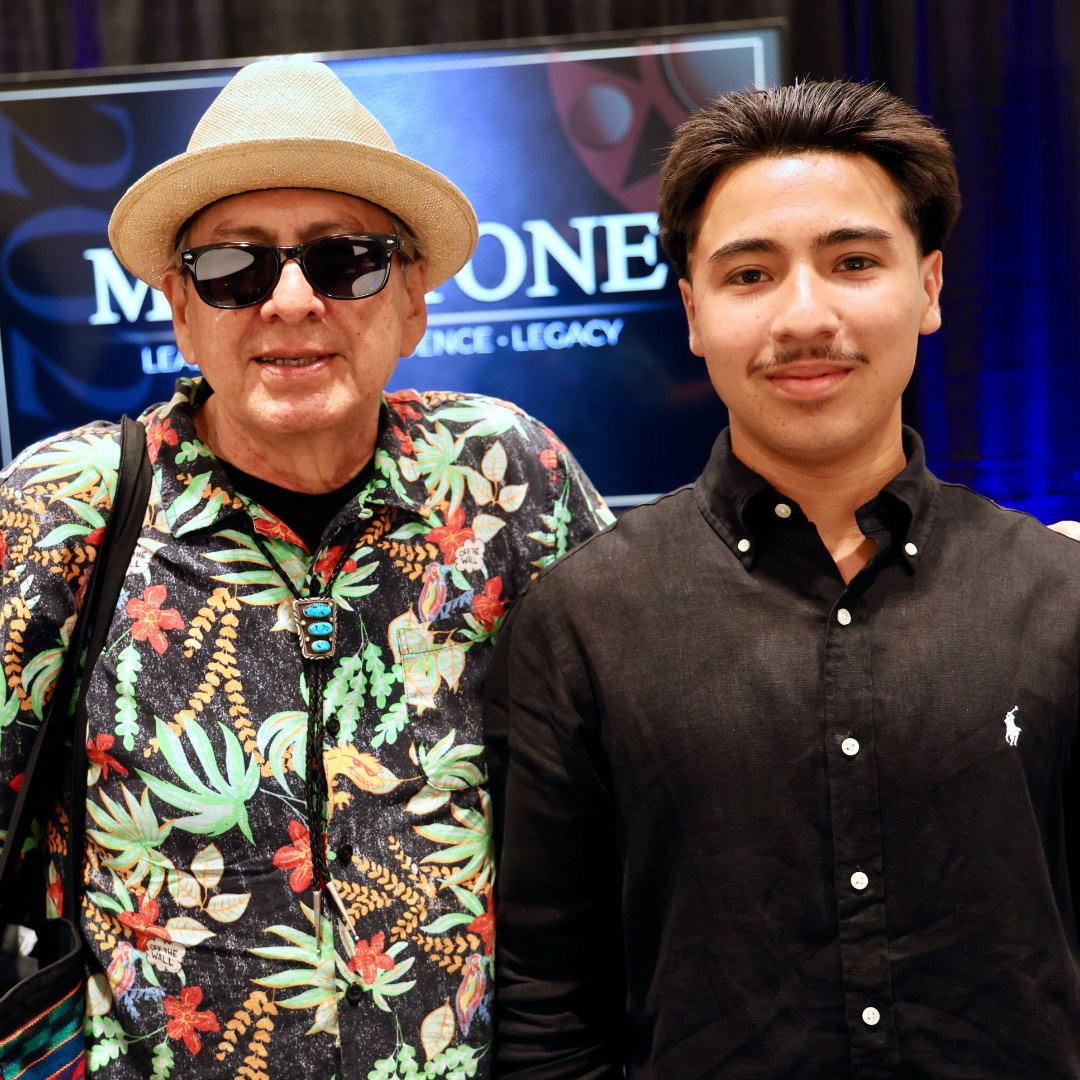
    Milestone: Leadership • Influence • Legacy — Coming Soon

    Milestone: Leadership • Influence • Legacy — Coming Soon

    Milestone: Leadership • Influence • Legacy — Coming Soon

    A new in-person experience is taking shape.

    MILESTONE  – LEADERSHIP • INFLUENCE • LEGACY is an upcoming recognition and storytelling event designed to honor the individuals and organizations whose leadership, influence, and legacy continue to shape our communities. More than an awards program, Milestone is a platform for connection bringing together changemakers, creatives, entrepreneurs, and community leaders for meaningful conversation and shared reflection.

    Hosted by HL, Milestone will spotlight voices and journeys that define progress across business, culture, community, and civic life. Attendees can expect a thoughtfully curated program that blends recognition, dialogue, and community engagement capturing the stories behind the impact.

    Details including location, dates, and honorees will be announced soon. This article will be updated as plans are finalized.

    For now, we invite you to follow along and be part of what’s next.
    Built on Trust.
    Driven by Culture.
    Powered by Influence.

    Visit HispanicLifestyle.com and subscribe to HL | Update for the latest announcements.

    More Stories

    Home Renovation Scams

    Home Renovation Scams

    Home Renovation Scams

    As Home Renovation Demand Surges, So Do Contractor Scams. A Warning for Homeowners

    As demand for home repair and renovation services climbs across the U.S., so too do scams that leave families financially devastated and projects unfinished. According to recent data, in 2024 the Federal Trade Commission (FTC) received more than 81,900 reports of home improvement scams, with homeowners losing an average of roughly $1,800 per incident.

    Industry analysts say scammers exploit periods when demand outpaces available qualified labor much like the market conditions today by targeting homeowners who feel pressured to act quickly. FTC data shows overall consumer fraud losses topped $12.5 billion in 2024, with reported scams increasing in severity and cost.

    “Contractor fraud is becoming a significant issue for homeowners,” says Jon Grishpul, Co-CEO of GreatBuildz.com. “With renovation costs rising and schedules tight, unqualified or unscrupulous contractors can prey on trusting consumers. Knowing the warning signs and how to verify contractors is more important than ever.”

    Real Consequences: When a Renovation Turns Into a Nightmare

    Homeowners who’ve never managed a major construction project may not recognize the risk until it’s too late. In one widely reported case, a Colorado homeowner lost her entire retirement savings during a $350,000 renovation project that was mismanaged and abandoned by the contractor, forcing expensive redo work and jeopardizing her home.

    Common Scam Patterns to Watch For

    Contractor scams often follow familiar patterns, such as:

    • Offering unusually low bids or only accepting cash
    • Pressuring homeowners to sign contracts on the spot
    • Failing to provide valid license, insurance, or bonding information
    • Claiming access to “leftover materials” at steep discounts

    The FTC and consumer protection groups also highlight these red flags consumers should never ignore:

    • Vague or missing details in bids
    • Requests for full payment upfront or very large deposits
    • No written contract or refusal to verify credentials with state licensing boards

    These are consistent with widely cited contractor-fraud warning signs published by the FTC.

    Protecting Yourself –  Steps Homeowners Can Take

    Industry experts stress this isn’t optional  verification is essential:

    • Check credentials: Verify a contractor’s license, insurance, and bond status with state or county authorities before signing anything.
    • 
Get multiple estimates: Collect at least three detailed written bids for comparison.
    • 
Use secure payments: Avoid cash payments  use credit cards or checks that provide a financial trail.
    • Research reputation: Look up contractors with the Better Business Bureau and state consumer protection agencies.

    “Homeowners should think like investigators,” Grishpul adds. “A legitimate contractor is transparent about credentials and comfortable with verification checks. If someone avoids scrutiny or pushes urgency, that’s a red flag.”

    As part of our Home Tu Casa series, we’re committed to equipping homeowners with not just inspiration for renovations but practical, safety-first advice. Knowing how to spot fraud, verify professionals, and protect your investment isn’t just smart  it’s necessary in today’s busy market.

    Sources: FTC, Jon Grishpul

    More Stories

    On the Edge With Juanpa

    On the Edge With Juanpa

    On the Edge With Juanpa

    The series featuring Juanpa Zurita takes viewers on thrilling adventures across the United States, where he partners with variety of individuals for exhilarating experiences.

    PARTNERS 

    In the new Roku Original series, On The Edge with Juanpa, Toyota is moving beyond traditional TV ad spots to embed its rugged truck lineup including the Tacoma, Land Cruiser, and 4Runner directly into high-octane stunts. The show features Juanpa partnering with Red Bull athletes for extreme challenges like wing suiting and cliff diving, providing a natural environment to uncover challenges that revolve around endurance while offering Hispanic fearless explorers like Juanpa the inspiration to push beyond their own limits.

    Roku Originals is available exclusively on The Roku Channel. From award-winning scripted entertainment and engaging documentaries to breakout new unscripted series, Roku Originals is bold, fresh entertainment from the biggest names in Hollywood, and best of all, it’s free. This is relevant, diverse entertainment that is accessible to everyone, everywhere The Roku Channel is available no subscription, no signup and no strings attached.

    More Stories

    Selena: From Texas To The World

    Selena: From Texas To The World

    Selena: From Texas To The World

    The GRAMMY Museum® presents a special pop-up exhibition celebrating the enduring legacy of Selena, an icon whose impact on music, fashion and culture continues to inspire generations around the world.


    Opening Jan. 15, 2026, and running through March 16, 2026, this limited-time exhibit marks the first official display of Selena’s personal artifacts outside of the Selena Museum in her hometown of Corpus Christi, Texas. 

    Curated in collaboration with Suzette Quintanilla, Selena’s sister and President of Q Productions, the exhibit offers an intimate glimpse into Selena’s life, artistry and groundbreaking career.

    The Quintanilla Family & Chris Pérez are deeply honored to share Selena’s story and legacy with fans in such a meaningful way. It’s incredibly special to share these treasured items, for the very first time outside of our Selena Museum, at the iconic GRAMMY Museum in Los Angeles. Selena and our band were extremely proud to receive a GRAMMY® for our live concert. This exhibit is a beautiful tribute to her spirit, her culture and the unwavering love she had for fans.”

    Suzette Quintanilla

    Selena’s sister and, President, Q Productions

    Kelsey Goelz, GRAMMY Museum Curator, added,

    “Selena’s impact transcends genres and generations. She paved the way for so many artists who followed in her footsteps. We’re thrilled to celebrate her at the GRAMMY Museum, where lifelong fans can feel closer to her and a new generation can discover her.”

    Beyond her chart-topping success, Selena was a fashion pioneer whose signature style, from shimmering bustiers and iconic stage outfits to bold red lipstick, continues to influence pop culture and street fashion today. Her charisma, determination and pride in her Mexican-American heritage made her a symbol of empowerment for young women and Latin communities across the world.

    Exhibit highlights:

    1. The outfit Selena wore on the cover of Amor Prohibido, complete with her signature gold hoop earrings
    2. The white beaded Lillie Rubin gown Selena wore to the 1994 GRAMMY Awards®
    3. Selena’s GRAMMY Award and Lifetime Achievement Award
    4. Instruments played by Selena’s siblings Suzette Quintanilla (snare drum) and A.B. Quintanilla III (bass), as well as former husband Chris Pérez (guitars)
    5. Selena’s microphone, still marked with her red lipstick
    6. Hand-drawn fashion designs from her teenage years
    7. Selena’s personal cell phone

    ABOUT SELENA

    It is not an everyday occurrence that an individual is born who is destined to touch the lives of millions. But on April 16, 1971, in Lake Jackson, Texas, such an individual was born. Her name was SELENA. Alongside her brother, Abraham III (bass), sister, Suzette (drums), and their manager father, Abraham, they created an unforgettable musical experience that continues to inspire and thrill fans globally to this day. With the combination of her charismatic stage presence and memorable songs, she ultimately became the #1 selling female artist in Latin music history and is acclaimed for hits such as “Como La Flor,” “Bidi Bidi Bom Bom,” “I Could Fall In Love,” and “Dreaming Of You.” All this culminated in her becoming the first female Tejano artist to win a GRAMMY® Award, earning Best Mexican/American Album for Selena Live! She has become a legendary bicultural icon and one of the most celebrated Mexican-American entertainers of the late 20th century and continues to be lauded to this day.

    ABOUT THE GRAMMY MUSEUM

    The GRAMMY Museum is a nonprofit organization dedicated to celebrating and exploring music from yesterday and today to inspire the music of tomorrow through exhibits, education, grants, preservation initiatives, and public programming. Paying tribute to our collective musical heritage, the Museum values and celebrates the dynamic connection in people’s diverse backgrounds and music’s many genres, telling stories that inspire us, and creative expression that leads change in our industry. For more information, visit www.grammymuseum.org

    More Stories

    Kia’s Vision for the Road Ahead

    Kia’s Vision for the Road Ahead

    Kia’s Vision for the Road Ahead

    Exclusive photos and article by Richard Sandoval | Hispanic Lifestyle

    Eric Watson, Vice President of Sales Operations at Kia America, Inc., shares insights on design, innovation, and the 2027 Telluride.

    At the Los Angeles Automobility Show, Kia signaled a confident next chapter one shaped by bold design, evolving technology, and a clear understanding of today’s consumer. In a conversation with HL, Eric Watson, Vice President of Sales Operations at Kia America, Inc., shared how the brand continues to build momentum while staying grounded in value, accessibility, and long-term ownership confidence.

    Against the backdrop of one of the auto industry’s most influential stages, Watson outlined how Kia’s flagship vehicles, expanding hybrid strategy, and reimagined customer experience are positioning the brand for a strong 2026 and beyond.

    A Decade of Growth

    Over the last decade, Kia has steadily transformed its identity in the U.S. market. Once known primarily for affordability, the brand has earned recognition for design leadership, product quality, and a lineup that spans sedans, SUVs, electric vehicles, and increasingly, hybrids.

    According to Watson, this evolution has been intentional and customer driven. Kia’s current momentum reflects years of consistent investment in product development, retail experience, and listening to how drivers’ needs are changing particularly as families, first-time buyers, and multi-generational households seek versatility without sacrificing style.

    Design has become one of Kia’s strongest differentiators. Watson emphasized that today’s Kia vehicles are engineered to look and feel premium while remaining attainable.

    “We’re very thoughtful about how we package our vehicles,” Watson noted. “We bring a lot of safety features and technology to market, but we’re careful not to overdo it in ways that make vehicles unaffordable.”

    Innovation, for Kia, is less about novelty and more about relevance technology that improves everyday driving, safety that builds confidence, and design that resonates across lifestyles.

    THE 2027 KIA TELLURIDE

    One of the most anticipated moments for Kia at this year’s show was the introduction of the all-new 2027 Kia Telluride. As the flagship of the brand, the Telluride has played a pivotal role in reshaping public perception of Kia. Since its debut, Kia has sold nearly 600,000 Telluride models an achievement Watson credits to the vehicle’s balance of capability, design, and family-friendly practicality. The next-generation Telluride builds on that foundation, arriving larger, bolder, and more refined than its predecessor.

    “The Telluride has really changed the image of our company,” Watson shared. “This new generation is going to elevate our game even further.”

    As vehicle research and purchasing habits continue to shift online, Kia has adapted its approach to meet customers where they are. Today’s buyers often complete the majority of their research digitally before stepping into a dealership.

    To support this behavior, Kia introduced Kia EasyBuy, a platform that allows customers to complete part or all of the purchasing process online, with the flexibility to finalize their transaction at a dealership.

    At the same time, Kia is reimagining its physical retail spaces. The brand is rebuilding and rebranding dealerships nationwide, elevating both exterior design and interior customer areas to create more comfortable, premium environments for sales and service.

    While design and innovation have become hallmarks of the brand, value remains central to Kia’s identity. Watson highlighted the importance of long-term ownership confidence, reinforced by Kia’s industry-leading 10-year, 100,000-mile warranty.

    “That warranty gives customers real peace of mind,” he said. “It’s about confidence not just on the day of purchase, but for years afterward.”

    Kia’s approach to affordable luxury centers on delivering meaningful features, strong reliability, and competitive pricing ensuring accessibility without compromise.

    Quality, Confidence, and Value

    Looking toward 2026, Watson pointed to hybrid vehicles as a major focus for Kia’s future lineup. As consumer demand for efficiency and flexibility grows, hybrids offer a practical bridge between traditional combustion engines and full electrification.

    With a diversified product portfolio, continued investment in customer experience, and a strong pipeline of new vehicles, Kia enters the coming years with confidence and clarity.

    “I think the future of the Kia brand is bright,” Watson said. “We’ve got a lot of momentum, and we’re looking forward to a great 2026.”

    Kia’s presence at LA Mobility reflects more than a single product launch it represents a brand in motion. Through thoughtful design, accessible innovation, and a commitment to meeting real-world needs, Kia continues to shape how mobility fits into modern lifestyles.

    As part of HL  Autos • Motion • Mobility series, this conversation underscores how vehicles are more than transportation they are extensions of culture, family, and the way communities move forward together.


    EXCLUSIVE PHOTOS 

    by Richard Sandoval

    2026 Kia’s Vision for the Road Ahead

    More Stories

    Stephanie Beatriz | Culture, Community, Representation

    Stephanie Beatriz | Culture, Community, Representation

    Stephanie Beatriz | Culture, Community, Representation

    A Creative Conversation on the Red Carpet.

    Context and perspective from actress Stephanie Beatriz.

    Photos by Richard Sandoval | Production by ReWork Media Group

    Once again, Stephanie Beatriz made time for the media by greeting everyone with the same warmth, generosity, and thoughtfulness that have defined her career. A familiar and welcome presence at the event, Beatriz reflected on the importance of celebrating Latino talent, supporting one another, and continuing to show up in an industry that is still evolving.

    For Beatriz, attending the 40th Imagen Foundation Awards are more than a ceremony they are a reunion and a reaffirmation of community.

    “There are so many Latinos in Hollywood, and this particular night is really special to a lot of us,” she shared. “We’re all gathering to celebrate each other celebrate the work, and celebrate the work that’s coming.”

    She spoke candidly about how rare it can be for actors to pause and acknowledge one another amid demanding schedules. Nights like Imagen, she explained, create space for reflection and encouragement.

    “We’re all so busy thankfully that when we do get to see each other, we get to celebrate what’s coming next. That’s one of the most exciting things about being here.”

    A Career Built on Range and Repetition

    Audiences know Beatriz for her standout performances across television, film, and theater from the iconic role of Rosa Diaz on Brooklyn Nine-Nine, to her work on Modern Family, to her acclaimed turn in In the Heights, and more recently in the Netflix series A Man on the Inside. Beatriz credits her foundation in theater for shaping her approach to acting.

    “I’ve been very lucky that my career in film and television has reflected my career in theater,” she explained. “I was part of a repertory company doing two or three roles every season.”

    She recalled her formative years at the Oregon Shakespeare Festival, where versatility and discipline were essential.

    “We did all kinds of stuff. And my favorite thing is really just trying to disappear into the role to make it about the character and not about me.”

    That philosophy prioritizing craft over celebrity has allowed Beatriz to move seamlessly between comedy, drama, voice work, and stage performance, consistently surprising audiences while remaining grounded in her artistry.

    Representation, Resistance, and Resilience

    The conversation also turned serious as Beatriz addressed the broader cultural and political climate impacting Latino communities. Speaking with honesty and conviction, she emphasized why events like the Imagen Foundation Awards matter now more than ever.

    “We’re in a climate right now globally that is, for lack of a better word, shitting on the Latino community,” she said. “That’s why nights like this are important.”

    For Beatriz, the power of the evening lies in visibility and unity.

    “We’re all here together, and we’re not going anywhere. We’re part of the fabric of the United States. We’re part of the fabric of entertainment and we always have been.”

    She pointed out that Latino artists have been contributing to American entertainment since its earliest days.

    “From the very first sitcoms we’ve been here forever and we’re not going anywhere.”

    Beyond the Screen: Conversation and Connection

    In addition to her on-screen work, Beatriz continues to create space for honest dialogue off-camera. Alongside fellow actress and longtime friend Melissa Fumero, she co-hosts the podcast More Better with Stephanie & Melissa, where the two explore friendship, careers, culture, and personal growth with humor and heart.

    The project reflects much of what Beatriz spoke about on the red carpet connection, authenticity, and the importance of shared experiences.

    A Lasting Presence

    As the night continued and the red carpet buzzed with celebration, Stephanie Beatriz remained what she has always been at Imagen: present, thoughtful, and deeply connected to her community. Her words served as both a reminder and a rallying cry Latino voices matter, Latino stories endure, and collective celebration is itself an act of resilience.

    For audiences and fellow creatives alike, Beatriz’s message was clear: keep showing up, keep doing the work, and keep celebrating one another.

    More Stories