California Dream For All program

California Dream For All program

California Dream For All program

Dream For All will resume accepting applications in February to help more first-generation homebuyers

Californians can apply for Dream For All conditional approval beginning February 24

The California Housing Finance Agency’s Dream For All Shared Appreciation Loan program will begin accepting applications for down payment assistance on February 24th.

The life-changing down payment assistance program, which offers first-generation homebuyers up to 20% of their home purchase price or appraised value in down payment assistance, will be using a random selection process to facilitate the equitable distribution of state funds.

CalHFA expects to make $150 million to $200 million available for 2026, and potential applicants should start getting ready now. The random selection process will include Governor Newsom’s direction that at least 10% of the funding goes to applicants in a Qualified Census Tract.

The application window will close on March 16. After that, applications will be selected and audited. Recipients of conditional approval will have 90 days to shop for a home.

“The California Dream For All program has already helped thousands of Californians buy their first home,” said CalHFA Executive Director Tony Sertich. “As these homeowners begin to repay their loans, the funds are reinvested into the program to create a cycle that will continue far into the future, planting the seeds of generational wealth to help keep the California dream alive.”

Applicants will need to work with one of CalHFA’s Approved Lenders to get a Pre-Approval letter, prior to submitting their application. Other documents will be needed for submission, including a government-issued ID and parent information—the complete list is located on the Dream For All webpage along with other valuable program information.

“I didn’t think there was any way we could afford a house, especially in this area,” said Craig Terry, a youth program manager in Grass Valley. Terry and his wife applied for Dream For All but were placed on a waiting list. A few months later, the couple were approved and bought a home in August 2024. “It was a waiting game. Then, it got very real, very quickly.”

The California Dream For All program addresses the challenge of buying a home in California in several ways. First-generation homebuyers can receive a large enough down payment to eliminate the need for mortgage insurance and benefit from smaller monthly payments. The California Dream For All program’s shared appreciation loan will save the average homebuyer about $1,200 per month, according to California Forward, a nonprofit policy advocacy organization that prepared a report on shared appreciation for the California State Treasurer’s Office in 2022.

All borrowers must meet CalHFA’s Dream For All income limits – about $148,000 in Del Norte County, $168,000 in Los Angeles County and $309,000 in Santa Clara County.

The 2025-26 State Budget provided $300 million for the California Dream For All program, which will allow CalHFA to help approximately 2,000 additional households, including homebuyers that have been on the Dream For All waitlist.

Additionally, as those homeowners sell their homes, the state will recover the down payment plus a proportionate share of the appreciation and recycle those funds in order to assist more homebuyers.

The California Housing Finance Agency was created in 1975 with the goal of helping more Californians find a place to call home. CalHFA has helped more than 233,000 low- and moderate-income homebuyers with $43.5 billion in first mortgages and used $12.8 billion in financing for the construction and preservation of more than 85,000 rental housing units throughout the state. CalHFA is a self-supported state agency that doesn’t rely on taxpayer dollars for its operational costs but is currently administering various state and federal resources on behalf of the state through targeted programs. For more information on CalHFA programs, and how we are investing in diverse California communities, visit www.calhfa.ca.gov or call toll free at 877.9.CalHFA (877.922.5432).

More Stories

A Love Rooted in Faith

A Love Rooted in Faith

A Love Rooted in Faith

Maria Pilar Canals-Barrera & David Barrera on Marriage, Respect, and Partnership.

By HL | Culture & Influence Editorial Desk
Love • Faith • Partnership • Photos by Richard Sandoval | Production by ReWork Media Group

In an industry often defined by uncertainty, travel, long hours, and public scrutiny, longevity in marriage can feel rare. Yet for actors Maria Pilar Canals-Barrera and David Barrera, more than two and a half decades of marriage have been anchored by something deeper than fame or circumstance: faith.

Hispanic Lifestyle has had the privilege of connecting with this remarkable couple on multiple occasions over the years. During a red-carpet conversation on June 15, 2024, they offered a candid and heartfelt reflection on what has sustained their relationship a message that feels especially fitting as Valentine’s Day approaches.

“Don’t fight against yourself. Once you’re married, you’re one  so fight for the relationship, not against each other.”

Maria Pilar Canals-Barrera & David Barrera

“Our Commitment to God”

When asked about the secret to their enduring marriage, Maria did not hesitate.

“I believe it is our commitment to God, to what He says He wants for marriage.”

David echoed that sentiment with disarming humility.

“Truthfully, God just brought her into my life. I didn’t have a plan. He brought the most amazing woman into my life, and I’m just like, ‘Thank you, Lord.’”

For both, faith is not a slogan  it is structure. It shapes how they see each other, how they communicate, and how they navigate conflict.

Maria shared that when she began to truly seek God, she believed preparation was happening behind the scenes.

“I have no doubt that when I started to really seek God, He was preparing David for me.”

But faith alone, they stress, is not passive. It requires effort.

“You have to work at it. You have to want it.”

Respect Over Ego

There’s a common refrain in Hollywood: “Don’t marry an actor.” The lifestyle can be unpredictable. The schedules are demanding. The industry can test stability.

Maria acknowledges that perception.

“People say, ‘Oh, don’t marry an actor. It’s too crazy, the business.’ And I get it.”

Yet for them, profession was secondary to character.

David shared something that may be the true cornerstone of their bond:

“I look up to her. I respect her. I want to be like her. And that makes me want to love her and be with her forever.”

Maria responded with the same depth of admiration:

“I really respect the man that he is. He’s very tender, and he’s also very strong.”

In their words, admiration fuels affection. Respect sustains attraction. And partnership requires seeing your spouse not as competition — but as inspiration.

Real Love Includes Real Conflict

They are quick to clarify: their marriage is not perfect.

“Of course we argue.”

But what separates healthy conflict from damaging resentment is how they handle it.

They follow a principle many couples hear but few consistently practice: never let the sun go down on your anger.

“Sometimes we’ll be laying there, and I’ll say, ‘I’m sorry I yelled at you. I love you.’” “God doesn’t want us to go to bed angry.”

They understand something profound: unresolved tension does not disappear overnight. It hardens.

Maria described how holding onto frustration often leads to something worse than the original disagreement.

“The next day, you forgot what it was even about, you just have this yucky feeling. And who wants that?”

Choose What You’re Fighting For

Perhaps the most powerful message they offered was directed at younger couples.

“Careful what you’re fighting for. Are you fighting for the person that is your other half to be your enemy?”

Once married, they remind us, you are no longer two separate sides trying to win.

“Don’t fight against yourself. Once you’re married, you’re now one. And we are one.”

That mindset reframes disagreement. It transforms confrontation into collaboration.

Gratitude as Daily Practice

Beyond faith and communication, what stands out most in their exchange is gratitude.

David calls himself the lucky one.
Maria says the same about him.
They thank each other openly.

It is simple. It is intentional. And it is powerful.

“I love you.”
“I love you.”

Not as performance,  but as practice.

A Valentine’s Day Reflection

At HL | Culture & Influence, we often spotlight leadership, legacy, and influence. But lasting love is leadership at home. It is daily discipline. It is choosing respect over pride, forgiveness over resentment, and unity over ego.

For our readers this Valentine’s Day, Maria Pilar Canals-Barrera and David Barrera offer a reminder:

  • Seek something greater than yourself.
  • Respect the person you married.
  • Apologize quickly.
  • Fight for the relationship, not against each other.
  • Never let gratitude fade.

In a world that moves fast, enduring love is still built slowly — one prayer, one conversation, one “I’m sorry,” and one “I love you” at a time.

More Stories

Milestone | Orange County

Milestone | Orange County

Milestone | Orange County

Save the Date for Milestone Series Kickoff in Orange County
Nominations Now Open for 2026 Recognition

HL | Culture & Influence proudly announces the official Save the Date for the launch of its 2026 Milestone Series — Leadership • Influence • Legacy.

APRIL 30, 2026 – Orange County

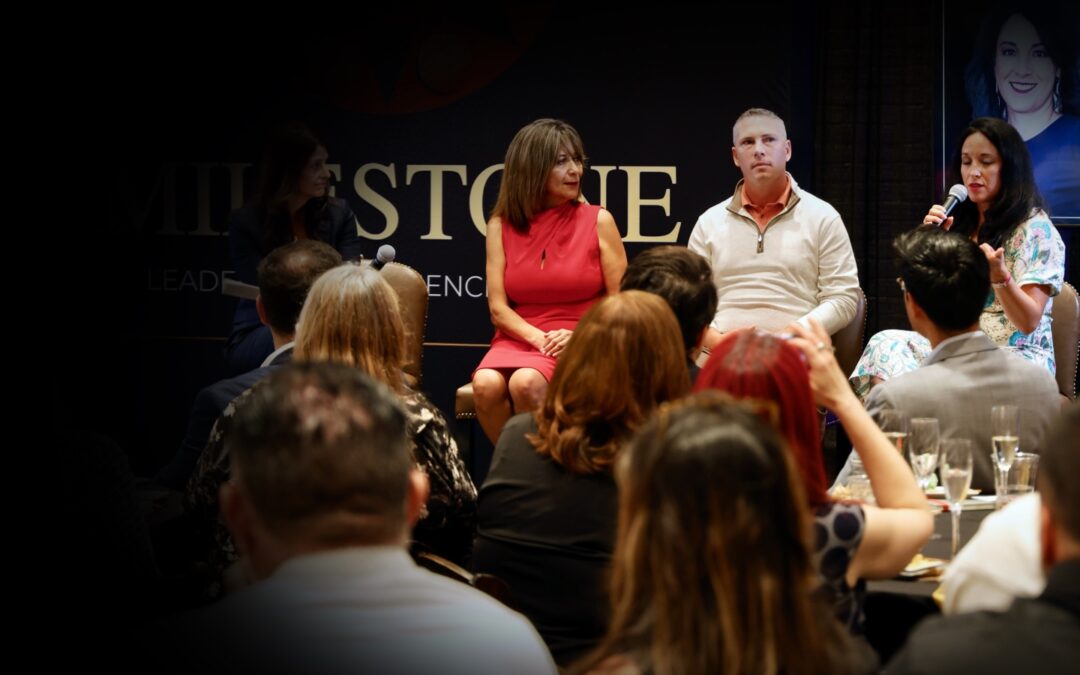
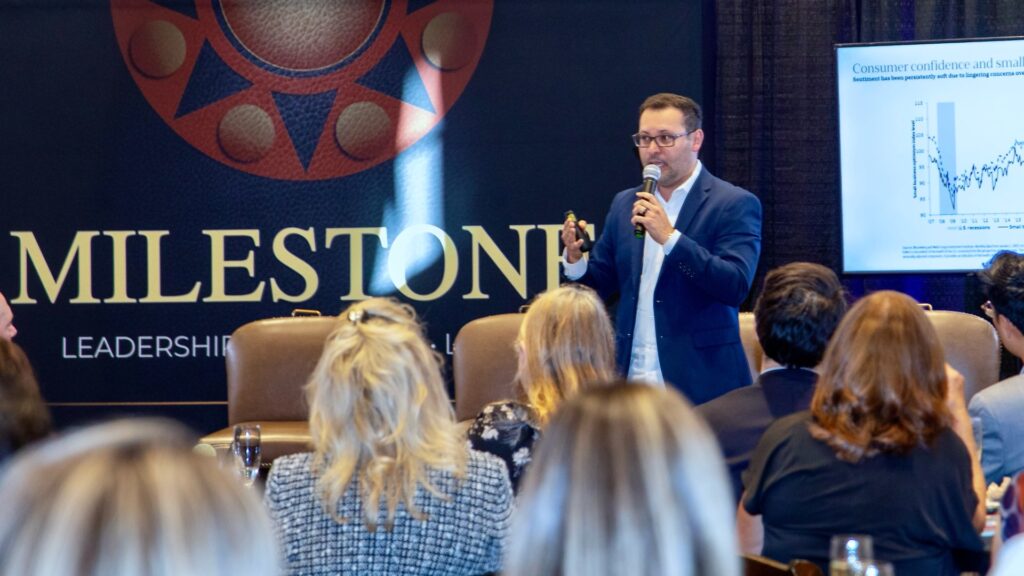
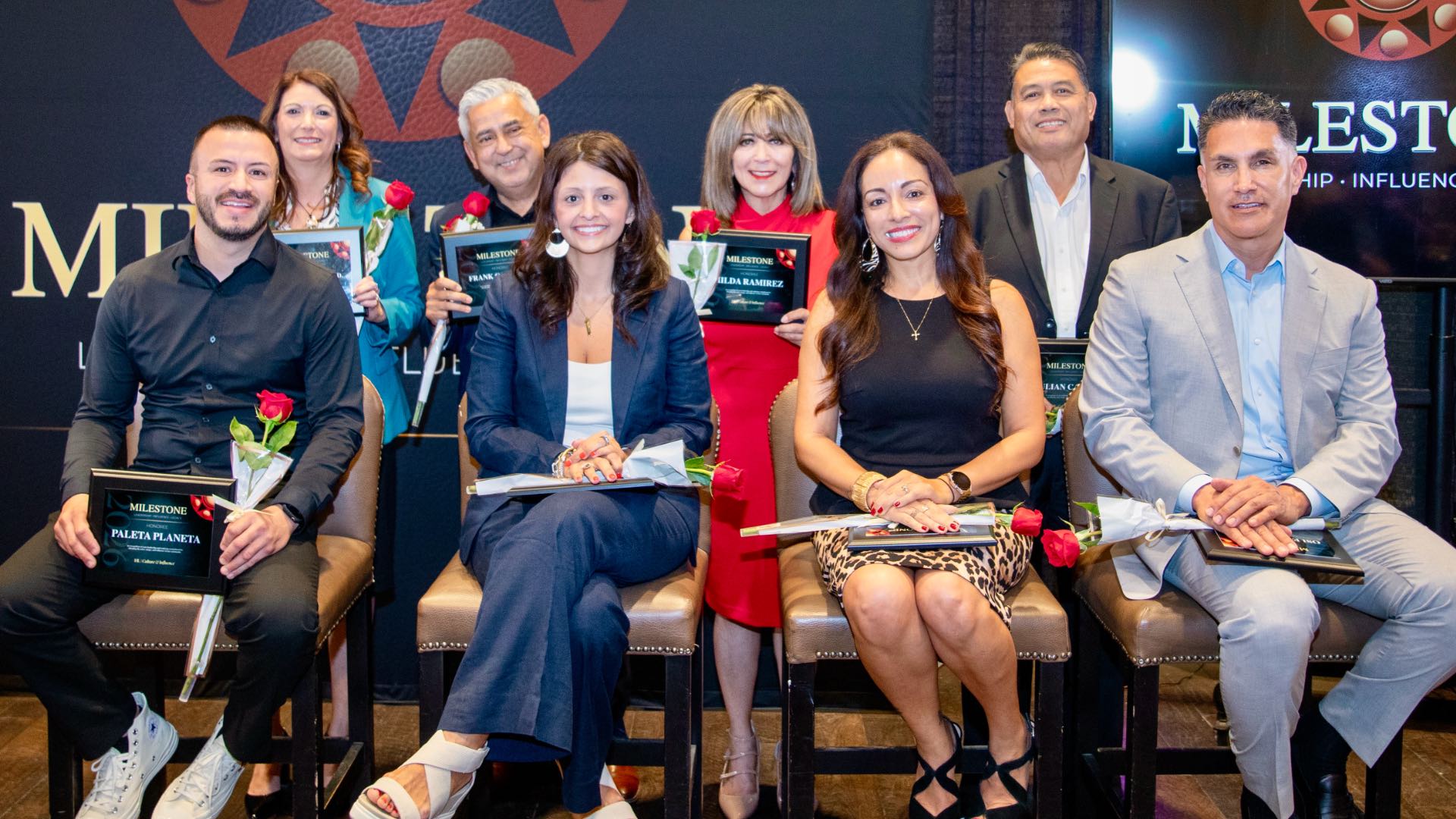
The Orange County kickoff will take place on April 30, 2026, convening an invitation-only audience of accomplished business and community leaders for an elevated evening of recognition, conversation, and connection.

This event marks the first chapter of a national series designed to spotlight individuals who have reached defining moments in their professional and personal journeys leaders whose work is shaping business, community, and culture.

Nominations Are Now Open

HL is currently accepting nominations for the 2026 Milestone Series honorees in the Orange County region.

We are seeking individuals who demonstrate:

  1. Executive or entrepreneurial leadership
  2. Measurable business or community impact
  3. Cultural influence within their industry or region
  4. A legacy-building mindset

Nominations may be submitted by peers, colleagues, organizations, or self-nomination.

Nomination Process:

  • Submit a formal nomination through the HL nomination portal.
  • Include professional background, leadership highlights, and measurable impact.
  • Provide supporting materials such as bio, headshot, and relevant links.
  • All nominations will be reviewed by the HL editorial and advisory team.

Selected honorees will be notified directly and formally invited to participate in the April 30, 2026 recognition program.

Invitation-Only Policy

To preserve the integrity and impact of the Milestone Series, all HL events operate under an invitation-only policy.

Attendance at the Orange County Milestone event is extended exclusively to:

Invitations are issued directly by HL. This curated approach ensures an intentional environment focused on meaningful engagement, trusted relationships, and long-term influence.

Individuals interested in attending are encouraged to subscribe to HL updates and explore participation in the HL | Partner Network for priority consideration at future events.

A National Series Begins in Orange County

The April 30, 2026 event sets the tone for additional Milestone Series gatherings planned in key markets across the United States throughout the year.

“Milestones represent more than achievement,” says HL Founder Richard Sandoval. “They reflect the leadership, resilience, and influence that shape our communities and industries. This series honors those defining moments.”

Further details regarding venue, program highlights, and honorees will be announced in the coming months.

NOMINATION FORM

More Stories

The Sleeping Giant Has Awakened

The Sleeping Giant Has Awakened

The Sleeping Giant Has Awakened

The U.S. Hispanic Market Begins to Flex Its Muscles and Stretch Its Influence

By HL | Culture & Influence, Richard Sandoval

For decades, the U.S. Hispanic market was described as emerging, promising, or one to watch. Those labels no longer apply.

What we are witnessing today is not emergence it is arrival.

Across business, culture, media, and consumer spending, U.S. Hispanics are no longer waiting for permission to influence the mainstream. They are shaping it through purchasing power that rivals entire national economies, entrepreneurial momentum transforming local markets, and cultural authority redefining what America watches, listens to, eats, and aspires to.

The sleeping giant has awakened.

From Demographic to Economic Force

The U.S. Hispanic population now exceeds 63 million people, representing nearly one in five Americans. But population alone does not explain the shift underway.

What matters is economic gravity.

U.S. Hispanic buying power now surpasses $2 trillion annually placing it among the world’s largest economies if measured independently. That spending stretches across housing, automotive, travel, financial services, healthcare, education, luxury goods, and digital media.

Equally important is how that spending is deployed. Hispanic consumers today are increasingly intentional rewarding brands, institutions, and platforms that demonstrate understanding, respect, and long-term commitment.

HL Perspective

A Question Asked in 1997, Answered Today

When Hispanic Lifestyle launched in 1997, the caption on our very first cover asked a simple but uncomfortable question:

“Are Hispanic consumers taken for granted?”

Inland Empire Hispanic Lifestyle Magazine Cover – 1997

At the time, the U.S. Hispanic market was often described as emerging or  as the “sleeping giant.” The phrase acknowledged a growing population, rising buying power, and a critical labor force. But it also revealed a deeper truth: our community was recognized in theory, yet rarely treated with urgency or respect in practice.

Nearly three decades later, that question has answered itself.

The U.S. Hispanic market has grown into a $2 trillion economic force, become a majority population in multiple states, and emerged as one of the most influential drivers of American culture and commerce. What was once framed as potential is now power.

In a time marked by national frustration and uncertainty, the Super Bowl halftime moment featuring Bad Bunny felt deeply symbolic. What some labeled controversy became education. Millions were reminded that Puerto Rico is part of the United States, that Spanish is a domestic language spoken by millions of Americans, and that Hispanic culture is not adjacent to the mainstream it is embedded within it.

The sleeping giant did not wake up that night.

It simply reminded the country that it has always been here building, contributing, and influencing.

The Rise of the Affluent U.S. Hispanic Consumer

One of the most underreported dynamics in today’s economy is the rapid growth of affluent Hispanic households.

Latinas and Latinos are increasingly represented among:

  • Six-figure household incomes
  • Business owners, investors, and senior executives
  • Competitive homebuyers in urban and suburban markets
  • Consumers of premium, luxury, and experience-driven products

This is largely earned wealth, built through entrepreneurship, education, and multigenerational sacrifice. With that wealth comes a shift in mindset from access to agency, from visibility to ownership, and from consumption to legacy.

Brands still relying on outdated assumptions about price sensitivity or entry-level positioning are already behind.

Culture as an Economic Engine

Culture has always been the connective tissue of the Hispanic community. Today, it has become a powerful economic lever.

Hispanic influence is unmistakable across:

  • Music and live entertainment
  • Film, streaming, and bilingual storytelling
  • Food, hospitality, and experiential dining
  • Fashion, beauty, and lifestyle branding
  • Social platforms where culture travels faster than advertising

What has changed is control. Hispanic creators, founders, and executives are no longer just contributors they are owners, investors, and decision-makers.

Influence has moved upstream.

The Super Bowl Moment: When Culture Moves Markets

The Super Bowl has long been America’s biggest shared cultural moment. What stood out this year was not just viewership, but who activated around it.

Bad Bunny

Bad Bunny’s presence connected directly with U.S. Hispanic audiences sparking watch parties, family gatherings, social engagement, and a surge in digital conversation. Streaming activity spiked. Spanish-language and bilingual content surged in visibility. Communities turned a broadcast moment into a shared cultural experience.

This was not simply entertainment.
It was an economic multiplier.

In minutes, culture moved markets demonstrating that when Hispanic audiences engage, they do so collectively, intentionally, and at scale.

Business, Media, and the Cost of Standing Still

There is now a widening gap between organizations that engage the U.S. Hispanic market and those that merely acknowledge it.

The leaders are investing in:

  • Long-term relationships, not one-off campaigns
  • Leadership visibility, not surface-level representation
  • Storytelling and experiences that respect nuance, ambition, and influence

Those who fail to adapt risk more than missed opportunity they risk irrelevance.

The U.S. Hispanic market is no longer asking to be included.

It is deciding who earns access.

What Comes Next

The awakening of the U.S. Hispanic market marks a defining chapter in American business and culture one shaped by confidence, capital, and cultural authority.

For business leaders, media companies, and institutions, the question is no longer if this market matters.

The question is whether they are prepared to meet it at its current level of sophistication, scale, and influence.

The giant is awake and it is moving with purpose.

The U.S. Hispanic Market: 1997 → Today

From Overlooked to Unmistakable

1997 | The Question

“Are Hispanic consumers taken for granted?”

  • U.S. Hispanic population: ~29 million
  • Buying power: under $500 billion
  • Hispanic media largely niche and underfunded
  • Spanish-language marketing treated as “add-on,” not strategy
  • Latino influence acknowledged but rarely prioritized

Hispanic Lifestyle launches amid questions of visibility and respect.

2000–2010 | The Foundation

  • Population growth accelerates nationwide
  • Hispanic labor force becomes essential to:
  • Construction
  • Agriculture
  • Hospitality
  • Manufacturing
  • Latino homeownership rises sharply
  • Spanish-language television gains national scale

The giant is building but still underestimated.

2010–2019 | The Shift

  • U.S. Hispanic population surpasses 50 million
  • Latino-owned businesses grow at 2–3× the national average
  • Buying power approaches $1.7 trillion
  • Streaming, music, and digital platforms amplify Latino voices
  • Younger Latinos reshape pop culture, language, and trends

From participation to influence.

2020–2024 | The Acceleration

  • Hispanics drive:
    • Workforce recovery
    • Small business creation
    • Housing demand in key markets
  • Spanish becomes a dominant language in U.S. digital culture
  • Latino creators and entrepreneurs move into ownership roles
  • Cultural moments increasingly originate from Hispanic communities

Influence moves upstream.

Today | The Reality

  • Population: 63+ million (nearly 1 in 5 Americans)
  • Buying power: $2+ trillion annually
  • Latinos represent a majority population in multiple U.S. states
  • Hispanic consumers span:
    • Entry-level to affluent
    • Blue-collar to executive leadership
    • First-generation to multi-generational wealth

According to the U.S. Census Bureau, Hispanics are now one of the most influential demographic, economic, and cultural forces shaping America’s future.

2026 and Beyond | What’s Different Now

  • The market is no longer asking to be seen
  • Brands no longer control the narrative
  • Cultural relevance now equals economic power

The sleeping giant hasn’t just awakened  it has learned how to move markets.

    More Stories

    Expanding Financial Access in Underinvested Communities

    Expanding Financial Access in Underinvested Communities

    Expanding Financial Access in Underinvested Communities

    How a $75 million federal investment is driving education, healthcare, and long-term economic mobility

    Access to capital remains one of the most powerful drivers of long-term wealth creation and economic stability. This month, City First Bank announced it has been awarded a $75 million New Markets Tax Credit (NMTC) allocation from the Community Development Financial Institutions Fund (CDFI Fund)—a significant infusion of federal investment aimed at accelerating economic growth in underinvested communities across the United States.

    The New Markets Tax Credit program is designed to channel private capital into projects that traditional financing often overlooks. For City First Bank, the latest allocation builds on a proven track record. Since the program’s inception, the bank has deployed $548 million in NMTC financing, supporting 54 projects focused primarily on education and healthcare infrastructure—two sectors closely tied to upward economic mobility and long-term community wealth.

    “This allocation is catalytic,” said Brian Argrett, President and CEO of City First Bank. “It enables us to partner with mission-driven organizations and deliver capital where it can create durable, generational impact.”

    Capital as a Tool for Economic Mobility

    From a finance and wealth perspective, NMTC allocations represent more than community investment—they are a strategic mechanism for reducing systemic capital gaps. By supporting schools, healthcare facilities, and nonprofit institutions in low-income areas, these investments help stabilize neighborhoods, attract additional private funding, and expand access to essential services that underpin workforce participation and small business growth.
    City First Bank’s approach reflects a growing shift within values-driven banking: deploying structured capital to unlock long-term economic returns that extend beyond quarterly profit metrics.

    Strengthening Governance and Oversight

    As part of its continued expansion, City First Bank also announced new appointments to its NMTC Advisory Council, reinforcing its commitment to disciplined investment and community-centered strategy:

    • Desmond Marshall, a Chicago-based community development leader with extensive experience scaling mission-driven organizations
    • Dr. Marla Dean, a Washington, D.C.–based nonprofit strategist with deep expertise in education and next-generation economic mobility models

    Their additions bring increased oversight and sector-specific insight at a time when demand for impact-focused capital continues to rise.

    The Bigger Picture for Finance and Wealth

    For financial institutions, investors, and policymakers, the latest NMTC allocation highlights how federal tools—when paired with experienced community lenders—can serve as catalysts for inclusive growth. As conversations around equitable finance and access to capital evolve, programs like NMTC remain central to expanding opportunity in communities historically left outside traditional banking systems.

    About City First Bank

    City First Bank provides commercial lending, financial services, and deposit products that support affordable housing, small businesses, and nonprofit community facilities in underinvested neighborhoods. The bank is a Community Development Financial Institution (CDFI), a Certified B Corporation, and a member of the Global Alliance for Banking on Values.
Member FDIC | Equal Housing Lender

    More Stories

    HL | Latinas of Influence — Legacy Project

    HL | Latinas of Influence — Legacy Project

    HL | Latinas of Influence — Legacy Project

    For more than three decades, Hispanic Lifestyle has been committed to recognizing the women whose leadership, resilience, and influence have shaped business, culture, and community across the United States. Through this ongoing work, nearly 500 Latinas have been honored each story contributing to a powerful and growing narrative of impact.

    Today, that legacy enters a new chapter.

    Introducing the HL | Latinas of Influence — Legacy Project

    The HL | Latinas of Influence — Legacy Project is a reimagined, living platform designed to preserve, elevate, and expand the stories of Latina leaders whose influence continues to shape our communities and inspire future generations.

    This is more than a recognition program. It is an evolving archive of leadership, excellence, and lived experience.

    Through updated digital profiles, new editorial features, video storytelling, and national distribution, the Legacy Project ensures that the voices of Latinas past honorees and future trailblazers alike remain visible, relevant, and impactful.

    Support the Latinas of Influence | Legacy Project and help preserve and elevate the stories of Latina leaders shaping business, culture, and community. Your sponsorship creates lasting impact and year-round visibility.

    “For more than 30 years, HL has had the privilege of telling the stories of extraordinary Latinas whose leadership has shaped our communities. The Legacy Project ensures these stories don’t fade with time. Instead, they live on, documented, accessible, and positioned to inspire the next generation of leaders.”

    Richard Sandoval

    Founder, President, Hispanic Lifestyle

    Why the Legacy Project Matters Now

    Latinas are among the fastest-growing and most influential contributors to the U.S. economy, culture, and civic life. Yet their achievements are still too often underrepresented or under-documented.

    The Legacy Project addresses that gap by:

    • Preserving legacy through verified digital profiles and editorial features
    • Amplifying influence via national content distribution and social platforms
    • Connecting generations of leaders, mentors, and emerging voices
    • Creating ongoing visibility, not one-time recognition

    As Sandoval notes, “Legacy is not about a single moment of recognition it’s about sustained visibility and continued relevance. Our responsibility is to make sure these stories remain part of the cultural record.”

    What the Legacy Project Includes

    Each Legacy Project profile may include:

    • An updated leadership biography and professional highlights
    • Editorial features aligned with HL’s Culture & Influence coverage
    • Optional short-form video storytelling
    • A Legacy Project digital badge for professional and social use
    • Ongoing visibility through HL platforms and special editorial moments, including Women’s History Month

    Together, these elements create a permanent digital footprint that honors where these women have been—and where their influence continues to grow.

    A Platform Built on Trust

    For more than three decades, HL has served as a trusted voice in the community recognized for thoughtful editorial standards, authentic storytelling, and meaningful relationships.

    The Latinas of Influence — Legacy Project builds on that foundation, offering a platform where recognition evolves into long-term visibility, credibility, and connection.

    Join the Legacy

    The HL | Latinas of Influence — Legacy Project invites past honorees, partners, and supporters to participate in this next chapter ensuring that the stories of Latina leadership are not only remembered, but continuously shared.

    Because legacy is not static. It is lived, shaped, and passed forward.

    HL | Latinas of Influence – Update Form

    EXCLUSIVE PHOTOS 

    2024 Connecting Latinas of Influence | Los Angeles

    More Stories

    Hispanic Motor Press Defines Value and Culture at the 2025 AutoMobility LA

    Hispanic Motor Press Defines Value and Culture at the 2025 AutoMobility LA

    Hispanic Motor Press Defines Value and Culture at the 2025 AutoMobility LA

    Exclusive photos and article by Richard Sandoval | Hispanic Lifestyle

    Founder & President Ricardo Rodríguez-Long on honoring vehicles that reflect Hispanic families, lifestyle, and influence

    At the 2025 AutoMobility LA press conference, Hispanic Motor Press announced its 16th Annual Vehicle Awards, recognizing standout vehicles across five categories that matter most to Hispanic consumers. Shortly after the announcement, Hispanic Lifestyle spoke with Ricardo Rodríguez-Long, Founder & President of Hispanic Motor Press, about the organization’s mission and this year’s honorees.

    “This is our 16th annual awards presentation,” Rodríguez-Long shared. “Hispanic Motor Press was created to honor vehicles that excel—but with a Hispanic touch. We focus on value, not just a pretty car. Reliability, design, safety, comfort, and price all matter.”

    Rodríguez-Long emphasized that the Hispanic market is not only significant it’s influential. Hispanic consumers represent roughly 20 percent of the U.S. population, translating into billions of dollars in purchasing power. Hispanic Motor Press approaches vehicle testing with cultural insight, understanding how language, family structure, and lifestyle shape buying decisions.

    “We have certain traits that make us different,” he explained. “The Spanish language itself allows us to express things differently. Speaking to the consumer in a way that resonates culturally is what sets us apart.”

    Rather than naming a single “car of the year,” Hispanic Motor Press evaluates vehicles across five categories | Family Car, Luxury Vehicle, Truck, SUV, and Electric Vehicle reflecting the diverse needs of Hispanic households.

    “Latino families are often large,” Rodríguez-Long said. “We travel with Abuelas, Tíos, and everyone else. We tow, we vacation, and we bring everything with us. The vehicles we recognize must fit that reality.”

    While the automotive market is crowded with strong options, Rodríguez-Long noted that some vehicles stand out for their overall balance of practicality and value—especially as prices continue to rise.

    “Brand loyalty alone isn’t always practical anymore,” he said. “Our job is to help consumers find value. And we do this as volunteers, because we owe it to our community.”

    2025 Hispanic Motor Press Award Winners
    The following vehicles were recognized at AutoMobility LA for meeting the needs of Hispanic families and lifestyles:

    • Best Electric Vehicle: Hyundai IONIQ 9 – A fully electric, three-row SUV designed for families, offering space, comfort, and zero-emissions travel.
    • Best Truck: Ram 1500 – A versatile pickup with a refined interior, capable of serving both workdays and family weekends.
    • Best SUV: Toyota RAV4 – One of today’s most popular SUVs, known for versatility, efficiency, and broad appeal.
    • Best Luxury Vehicle: Lincoln Navigator – A spacious luxury SUV delivering comfort, power, and premium travel capability.
    • Best Family Car: Kia Carnival – Purpose-built for families, offering generous seating, functionality, and comfort.

    Each vehicle was selected after extensive real-world testing conducted by Hispanic Motor Press volunteers nationwide.

    Rodríguez-Long closed with a message to car buyers:

    “Before you buy, visit HispanicMotorPress.org. We’re a nonprofit organization. We test vehicles so you don’t have to saving you time and money.”

    EXCLUSIVE PHOTOS 

    by Richard Sandoval

    2026 Hispanic Motor Press Awards

    More Stories

    Milestone | Leadership • Influence • Legacy

    Milestone | Leadership • Influence • Legacy

    Milestone | Leadership • Influence • Legacy

    A new in-person experience is taking shape.

    MILESTONE  – LEADERSHIP • INFLUENCE • LEGACY is an upcoming recognition and storytelling event designed to honor the individuals and organizations whose leadership, influence, and legacy continue to shape our communities. More than an awards program, Milestone is a platform for connection bringing together changemakers, creatives, entrepreneurs, and community leaders for meaningful conversation and shared reflection.

    Hosted by HL, Milestone will spotlight voices and journeys that define progress across business, culture, community, and civic life. Attendees can expect a thoughtfully curated program that blends recognition, dialogue, and community engagement capturing the stories behind the impact.

    In 2026, the Milestone Series will take place in three key markets:
    Orange County (SoCal), New York, and Silicon Valley (San Jose/Sunnyvale).

    Additional markets may be added to the 2026 HL Milestone Series.

    Honorees will be announced soon. This page will be updated.

    Subscribe to HL | Update for the latest announcements.

    NOMINATION FORM

    More Stories

    Home Renovation Scams

    Home Renovation Scams

    Home Renovation Scams

    As Home Renovation Demand Surges, So Do Contractor Scams. A Warning for Homeowners

    As demand for home repair and renovation services climbs across the U.S., so too do scams that leave families financially devastated and projects unfinished. According to recent data, in 2024 the Federal Trade Commission (FTC) received more than 81,900 reports of home improvement scams, with homeowners losing an average of roughly $1,800 per incident.

    Industry analysts say scammers exploit periods when demand outpaces available qualified labor much like the market conditions today by targeting homeowners who feel pressured to act quickly. FTC data shows overall consumer fraud losses topped $12.5 billion in 2024, with reported scams increasing in severity and cost.

    “Contractor fraud is becoming a significant issue for homeowners,” says Jon Grishpul, Co-CEO of GreatBuildz.com. “With renovation costs rising and schedules tight, unqualified or unscrupulous contractors can prey on trusting consumers. Knowing the warning signs and how to verify contractors is more important than ever.”

    Real Consequences: When a Renovation Turns Into a Nightmare

    Homeowners who’ve never managed a major construction project may not recognize the risk until it’s too late. In one widely reported case, a Colorado homeowner lost her entire retirement savings during a $350,000 renovation project that was mismanaged and abandoned by the contractor, forcing expensive redo work and jeopardizing her home.

    Common Scam Patterns to Watch For

    Contractor scams often follow familiar patterns, such as:

    • Offering unusually low bids or only accepting cash
    • Pressuring homeowners to sign contracts on the spot
    • Failing to provide valid license, insurance, or bonding information
    • Claiming access to “leftover materials” at steep discounts

    The FTC and consumer protection groups also highlight these red flags consumers should never ignore:

    • Vague or missing details in bids
    • Requests for full payment upfront or very large deposits
    • No written contract or refusal to verify credentials with state licensing boards

    These are consistent with widely cited contractor-fraud warning signs published by the FTC.

    Protecting Yourself –  Steps Homeowners Can Take

    Industry experts stress this isn’t optional  verification is essential:

    • Check credentials: Verify a contractor’s license, insurance, and bond status with state or county authorities before signing anything.
    • 
Get multiple estimates: Collect at least three detailed written bids for comparison.
    • 
Use secure payments: Avoid cash payments  use credit cards or checks that provide a financial trail.
    • Research reputation: Look up contractors with the Better Business Bureau and state consumer protection agencies.

    “Homeowners should think like investigators,” Grishpul adds. “A legitimate contractor is transparent about credentials and comfortable with verification checks. If someone avoids scrutiny or pushes urgency, that’s a red flag.”

    As part of our Home Tu Casa series, we’re committed to equipping homeowners with not just inspiration for renovations but practical, safety-first advice. Knowing how to spot fraud, verify professionals, and protect your investment isn’t just smart  it’s necessary in today’s busy market.

    Sources: FTC, Jon Grishpul

    More Stories

    On the Edge With Juanpa

    On the Edge With Juanpa

    On the Edge With Juanpa

    The series featuring Juanpa Zurita takes viewers on thrilling adventures across the United States, where he partners with variety of individuals for exhilarating experiences.

    PARTNERS 

    In the new Roku Original series, On The Edge with Juanpa, Toyota is moving beyond traditional TV ad spots to embed its rugged truck lineup including the Tacoma, Land Cruiser, and 4Runner directly into high-octane stunts. The show features Juanpa partnering with Red Bull athletes for extreme challenges like wing suiting and cliff diving, providing a natural environment to uncover challenges that revolve around endurance while offering Hispanic fearless explorers like Juanpa the inspiration to push beyond their own limits.

    Roku Originals is available exclusively on The Roku Channel. From award-winning scripted entertainment and engaging documentaries to breakout new unscripted series, Roku Originals is bold, fresh entertainment from the biggest names in Hollywood, and best of all, it’s free. This is relevant, diverse entertainment that is accessible to everyone, everywhere The Roku Channel is available no subscription, no signup and no strings attached.

    More Stories