
Cal Poly Pomona Names Vanya Quiñones as University President

Cal Poly Pomona Names Vanya Quiñones as University President

Cal Poly Pomona Names Vanya Quiñones as University President

by Richard Sandoval, for HL and Inland Valley Living

Women’s History Month Reflection

Veteran educator and scientist becomes the first Latina to lead the institution

The California State University Board of Trustees has appointed Dr. Vanya Quiñones as the next president of California State Polytechnic University, Pomona, marking a historic milestone for the university and the broader California State University system.

Quiñones, who currently serves as president of California State University, Monterey Bay, will assume the role on July 1, 2026, becoming the eighth president of Cal Poly Pomona and the first Latina to lead the institution.

Quiñones’ 30-year career in education as a scientist, researcher and academic administrator has been centered in student success and diversity in the arts and sciences.

Her appointment comes at a time when the university continues to expand its role as one of Southern California’s leading institutions for applied learning, innovation, and workforce development.

“I am profoundly honored to be chosen to lead Cal Poly Pomona, become part of its long and impressive history and contribute to its future vision,” Quiñones said. “I am drawn to Cal Poly Pomona’s strong focus on measuring success by the opportunities it creates and the impact it has on students, families and the surrounding community.”

Quiñones emphasized her commitment to working closely with faculty, students, and community partners to advance the university’s mission.

“I welcome the opportunity to work in partnership with the campus community to support the continued success of the institution and advance its mission for years to come,” she said.

A Record of Leadership and Growth

CSU leadership highlighted Quiñones’ strategic leadership and results-driven approach to higher education.

“Dr. Quiñones is an innovative and data-driven decision maker who aligns institutional priorities with student needs to support immediate progress and long-term stability,” said Diego Arambula, vice chair of the CSU Board of Trustees and chair of the Cal Poly Pomona Presidential Search Committee.

“Under her leadership at Cal State Monterey Bay, the university has thrived, and the committee is confident that her record of success will continue in service to Cal Poly Pomona.”

Since becoming president of Cal State Monterey Bay in 2022, Quiñones has led the university through a period of renewed momentum. During her tenure, the institution experienced nearly 30 percent enrollment growth, reversing several years of declining student numbers.

Her leadership has emphasized expanding experiential learning opportunities, strengthening student mentorship programs, and creating clearer academic pathways for students. The university has also improved its financial outlook while increasing research funding and philanthropic support.

A Career Dedicated to Student Success

Quiñones brings more than three decades of experience in higher education, including roles as a scientist, researcher, and academic leader focused on advancing student success in the arts and sciences.

Before joining the CSU system, she served as provost and executive vice president for Academic Affairs at Pace University in New York, where she oversaw academic programs, student academic services, and information technology while also holding the rank of full professor of psychology.

Earlier in her career, Quiñones spent 21 years at the City University of New York’s Hunter College, where she rose through the ranks from assistant professor to department chair in psychology before becoming associate provost for Student Success and Retention.

During her time at CUNY, she secured more than $25 million in funding from the National Institutes of Health, private foundations, and the U.S. Department of Education. Much of the funding supported research and academic initiatives focused on expanding opportunities for a wide range of students pursuing careers in science and research.

A Scientist and Pioneer in Research

Beyond her leadership in higher education, Quiñones is a respected scientist and scholar.

A neurobiologist and biopsychologist, she has published more than 70 peer-reviewed research papers and was among the early researchers whose work helped identify gender differences in the brain, contributing to a shift in how scientists approached neurological and behavioral research.

Her academic background includes:

  • Bachelor of Science in Biology – University of Puerto Rico
  • Master of Science in Cell Biology – University of Puerto Rico
  • Ph.D. in Neurobiology and Physiology – Rutgers University

Looking Ahead

As Cal Poly Pomona prepares for its next chapter, Quiñones’ leadership is expected to build on the university’s strong reputation for hands-on learning, community engagement, and preparing graduates for California’s evolving economy.

Her appointment also reflects the growing presence of Latina leadership within higher education  an important milestone for one of the nation’s most diverse public university systems.

More Stories

Latinas Shaping the Future of Perris, CA

Latinas Shaping the Future of Perris, CA

Latinas Shaping the Future of Perris, CA

by Richard Sandoval, for HL and Inland Valley Living

Women’s History Month Reflection

Sometimes the most meaningful stories begin with a simple decision to step away from routine.

During Women’s History Month, a visit to a morning gathering hosted by the Perris Valley Chamber of Commerce offered a reminder of how leadership and economic development are increasingly connected to the rise of Latina professionals shaping their industries.

The event featured remarks from 2023 HL Latina of Influence Vanessa Delgado, who spoke about progress on the Harvest Landing development project in Perris.

Business and community leaders gather during a Perris Valley Chamber of Commerce event highlighting regional development and leadership during Women’s History Month in Perris, California. From left to right: Laura Vazquez, Realtor; Violeta Aguilar-Wyrick, Founder of XARA Public Affairs; Vanessa Delgado, President of Azure Development; Maria Rosales of Taqueria 2 Potrillos; and Adriana Ochoa, Executive Director of the Perris Valley Chamber of Commerce.

The proposed project is significant in both scale and potential impact. Planned as a 358-acre retail center and business park, Harvest Landing represents one of the largest economic development efforts currently under consideration in the region. Projects of this magnitude have the potential to bring new businesses, jobs, and long-term economic growth to the community.

Vanessa Delgado President, Azure Development

During her remarks, Delgado shared a personal perspective that resonated with many in the room: she is among the small number of Latina developers in California working on projects of this scale.

Her comments prompted a deeper look into the broader landscape of women in the construction and development industries. A growing number of Latina professionals from engineers and architects to project managers and developers are entering fields historically dominated by men and contributing to major infrastructure and real estate projects across the country.

Just as noteworthy was the audience gathered that morning.

Among those attending were community leaders, entrepreneurs, and professionals representing the evolving leadership landscape of the Inland region. Conversations in the room included a Latina candidate running for a judicial seat in Riverside County, a new small business owner who recently launched an ice cream shop, and chamber members working to support business growth throughout the Perris Valley.

Moments like these illustrate the importance of local chambers of commerce as gathering spaces where ideas, relationships, and opportunities intersect.

And during Women’s History Month, it serves as an important reminder that Latinas are increasingly visible in industries helping shape the economic and physical future of communities across California.

For those paying attention, the takeaway is simple.

Sometimes the best insights about leadership and economic growth come not from formal reports or boardrooms, but from stepping into a room where community members are actively building the future together.

***

Editorial Note

HL will continue exploring the growing presence of Latina professionals in construction and development as part of an upcoming segment in our series “The Business of Surviving to Thrive.” The feature will spotlight women working across construction, engineering, real estate development, and infrastructure who are helping shape the next generation of projects in the United States.

More Stories

Women | Business | Wellness  Temecula, CA

Women | Business | Wellness Temecula, CA

Women | Business | Wellness Temecula, CA

INVITATION ONLY

Temecula, CA — HL | Culture & Influence proudly announces the launch of its Women | Business | Wellness series in Temecula, presented in partnership with Macy’s Temecula.

This invitation-only evening gathering will take place from 5:30 PM to 7:30 PM, bringing together accomplished women in business, entrepreneurship, and community leadership for a curated experience focused on growth, financial insight, personal wellness, and presentation style.

Produced by ReWork Media Group, Women | Business | Wellness reflects HL’s ongoing commitment to capturing the culture and influence of our community — and creating environments where meaningful relationships are built.

CONFIRM ATTENDANCE HERE


Evening Schedule

5:30 PM — Guest Arrival & Welcome Reception
Guests are welcomed with light refreshments while connecting with fellow professionals and community leaders in a relaxed networking setting.

6:00 PM — Welcome Remarks
Opening comments from the hosts of HL | Culture and Influence, produced by ReWork Media Group, along with acknowledgements of our partners and community supporters.

6:10 PM — Conversation: Business, Wellness & Financial Insight
A short moderated discussion highlighting perspectives on financial awareness, professional growth, and maintaining balance while navigating leadership and entrepreneurship.

6:35 PM — Presentation: Presentation Style & Personal Confidence
A brief presentation exploring how personal style and presentation can support professional confidence and leadership presence.

6:50 PM — Community Conversation & Networking
Guests are invited to continue the conversation, exchange ideas, and build meaningful connections with fellow attendees.

7:30 PM — Closing

FEATURED PRESENTER

Genoveva L. Arellano is the Founder and President & CEO of Arellano Associates, Inc., a leading consulting firm specializing in public outreach and communications for transportation, urban planning, energy and water initiatives.

With more than 30 years of experience, Ms. Arellano has led the development of innovative engagement strategies that integrate digital tools, creative design, and inclusive community outreach. She provides strategic leadership on multi-jurisdictional infrastructure programs, including transportation, energy, water and other local planning projects, helping agencies incorporate meaningful public input into project development.

Her bilingual proficiency and deep connection to the Latino community have made her a trusted advisor for projects aimed at Spanish-speaking and underserved populations.

COMMUNITY HOST PARTNERS

A Strategic Partnership

The collaboration with Macy’s Temecula reinforces the import

ance of presentation, confidence, and professional presence  elements that are often essential yet under-discussed components of leadership.

As a longstanding retail brand recognized for style and sophistication, Macy’s provides an ideal setting for conversations that bridge:

  • Personal presentation and executive presence

  • Financial clarity and wealth-building conversations

  • Entrepreneurship and career advancement

  • Wellness, balance, and sustainable leadership

This partnership elevates the experience beyond a traditional networking event. It becomes a statement about intentional growth.


Why Temecula? 

Located in the heart of Riverside County, Temecula represents economic momentum, entrepreneurial expansion, and a growing population of professional women shaping industries across the Inland region.

The evening format — 5:30 PM to 7:30 PM — allows guests to transition from their workday into a refined environment designed for thoughtful conversation and elevated connection.

This is not a large-scale conference.
It is not transactional networking.

Women | Business | Wellness is a curated room — intentional, intimate, and impact-driven.

CONFIRM ATTENDANCE HERE


What to Expect

Guests can anticipate:

  • A welcoming reception atmosphere

  • Structured conversations and short-format presentations

  • Insights on presentation style and professional positioning

  • Dialogue centered around business growth and financial awareness

  • Editorial coverage on Hispaniclifestyle.com and InlandValleyLiving.com

Each element is designed to encourage connection among women who lead with purpose and are actively shaping the future of business and community life in the region.


A Growing Series

The Temecula launch marks the beginning of a broader Women | Business | Wellness initiative that will continue to explore:

  • Personal brand and executive presence

  • Wealth, finances, and ownership

  • Entrepreneurship and scaling with intention

  • Lifestyle choices aligned with long-term goals

  • Health, mindset, and sustainable success

The series aligns with HL’s editorial theme: Defining Culture and Influence… in our community.


Attendance & Future Invitations

Attendance is extended to HL subscribers, HL Partner Network participants, and invited community leaders.

Those interested in learning more about future Women | Business | Wellness gatherings are encouraged to:

  • Subscribe to the HL Update newsletter

  • Explore participation through the HL Partner Network

  • Visit Hispaniclifestyle.com and InlandValleyLiving.com for updates

CONFIRM ATTENDANCE HERE


Women | Business | Wellness is more than an event.

It is an intentional gathering.
It is a platform for growth.
It is a reflection of the leadership and influence being defined every day by women in our community.


RSVP CONFIRMATION FORM

More Stories

Baseball, Campus Visit, The Value of Family Time

Baseball, Campus Visit, The Value of Family Time

Baseball, Campus Visit, The Value of Family Time

by Richard Sandoval, for HL and Inland Valley Living

A Warm Southern California Evening  and a Glimpse of What May Lie ahead.

Saturday evening gave us something that doesn’t always come easy when your children grow older, intentional family time.

When our kids were younger, family outings were simple. Disneyland. Knott’s Berry Farm. Weekend adventures built around rides, treats, and souvenirs. Those memories are stored safely in what I like to call our “family vault.”

But when your son is 16, a junior varsity baseball player, your role as a parent evolves into creating exposure to what the future might hold.

They become less about theme parks and more about possibilities..

 A Different Kind of Saturday Night

Earlier in the week, while scrolling Instagram, I came across a video of a baseball coach from the University of San Diego walking around campus handing out tickets to that evening’s game. I thought it was brilliant  grassroots, personal, inviting.

It sparked an idea.

USD is only about 75 miles south of us roughly an hour and fifteen minutes without traffic yet I had only recently stepped on campus for the first time during a National Hispanic Publishers Association conference last November. I remember being struck by the architecture, the setting, and the intentional beauty of the campus.

So Saturday, we made the drive.

It was a warm San Diego evening hovering around 80 degrees the kind of night that reminds you why Southern California baseball feels different.

The San Diego Toreros baseball, a Division I program competing in the West Coast Conference, have built a respected baseball tradition, including conference championship success in recent years. On this night, they faced the Michigan Wolverines baseball in a competitive non-conference matchup.

The home team came up short that night, but for us, the experience was a win.

Exposure Matters

For our son, it was more than just watching a game.

It was an opportunity to:

  • See Division I baseball up close.
  • Observe the speed, discipline, and professionalism of the college level.
  • Walk through a private university campus and imagine possibility.
  • Feel what it might be like to compete at that stage.

There’s something powerful about exposure.

Teenagers don’t always say much in the moment. But you can see it in their posture. Their focus. The way they watch warm-ups. The way they study the players’ routines.

Seeds are planted quietly.

Family Time Looks Different Now

As parents, we understand that not every weekend can be a trip to Costa Rica or Venice. Sometimes the most meaningful experiences are two hours down the freeway, sitting in stadium seats, talking between innings.

Family time changes as our children grow. It requires intention. It requires creativity. It requires us to look for new ways to connect.

And sometimes it’s as simple as:

  • A baseball game.
  • A campus visit.
  • A warm evening.
  • And the realization that these years move fast.

Anytime you get the opportunity to spend time with your teenage son or daughter take it.

The window narrows quicker than we think.

EXCLUSIVE PHOTOS 

2026 Baseball, Campus Visit, and Family Time

More Stories

Aspiration &  Affluence

Aspiration & Affluence

Aspiration & Affluence

A Closer Look at Latinas Defining Wealth in the U.S.

There is a quiet shift underway.

Across the United States, Latinas are moving beyond conversations about participation and potential. They are building assets, strengthening balance sheets, leading organizations, investing in property, prioritizing health, and thinking generationally. The narrative is evolving from earning to ownership, from visibility to influence.

This March, during Women’s History Month, HL | Culture & Influence will launch an ongoing documentary-style series titled:

Aspiration and Affluence: A Closer Look at Latinas Defining Wealth in the U.S.

This series will examine how Latinas are redefining what wealth means—not as status or spectacle, but as agency, stewardship, and long-term strategy.

Why This Series Now

The U.S. Hispanic market generates more than $3 trillion in annual economic output. Behind those numbers are women executives, entrepreneurs, professionals, investors, and community leaders who are shaping financial futures with discipline and intention.

For years, our editorial lens has highlighted leadership and enterprise. In this next chapter, we take the conversation further: how financial confidence changes decision-making; how career progression becomes asset-building; how aspiration matures into affluence with purpose.

This is not about consumption. It is about clarity.

What We Will Explore

Each installment will approach wealth-building through lived experience and data, examining:

  • From Ambition to Assets: The transition from income to ownership

  • Financial Literacy & Strategy: Investing, retirement planning, and risk management

  • Home & Real Estate: Property as foundation and legacy

  • Career & Equity: Leadership, negotiation, and enterprise value

  • Health & Longevity: Protecting the asset that makes everything possible

  • Presentation & Presence: How confidence and refinement evolve over time

  • Mobility & Lifestyle Choices: Decisions that reflect alignment, not impulse

  • Intergenerational Planning: Teaching wealth with intention

Our aim is to present a measured, research-informed look at affluence as a reflection of maturity and influence—how wealth is earned, how it is managed, and how it is passed forward.

A Documentary Lens with Purpose

In keeping with HL’s commitment to clarity and credibility, this series will pair real stories with current research, industry insight, and thoughtful analysis. We will profile women across sectors and geographies, explore patterns and progress, and ask the harder questions about access, responsibility, and legacy.

Women’s History Month is a meaningful starting point not only to celebrate achievement, but to examine the structural shifts shaping the next generation.

This is more than a theme.
It is a reflection of where we are and where we are going.

Aspiration and Affluence begins this March on Hispaniclifestyle.com.

More Stories

California Dream For All program

California Dream For All program

California Dream For All program

Dream For All will resume accepting applications in February to help more first-generation homebuyers

Californians can apply for Dream For All conditional approval beginning February 24

The California Housing Finance Agency’s Dream For All Shared Appreciation Loan program will begin accepting applications for down payment assistance on February 24th.

The life-changing down payment assistance program, which offers first-generation homebuyers up to 20% of their home purchase price or appraised value in down payment assistance, will be using a random selection process to facilitate the equitable distribution of state funds.

CalHFA expects to make $150 million to $200 million available for 2026, and potential applicants should start getting ready now. The random selection process will include Governor Newsom’s direction that at least 10% of the funding goes to applicants in a Qualified Census Tract.

The application window will close on March 16. After that, applications will be selected and audited. Recipients of conditional approval will have 90 days to shop for a home.

“The California Dream For All program has already helped thousands of Californians buy their first home,” said CalHFA Executive Director Tony Sertich. “As these homeowners begin to repay their loans, the funds are reinvested into the program to create a cycle that will continue far into the future, planting the seeds of generational wealth to help keep the California dream alive.”

Applicants will need to work with one of CalHFA’s Approved Lenders to get a Pre-Approval letter, prior to submitting their application. Other documents will be needed for submission, including a government-issued ID and parent information—the complete list is located on the Dream For All webpage along with other valuable program information.

“I didn’t think there was any way we could afford a house, especially in this area,” said Craig Terry, a youth program manager in Grass Valley. Terry and his wife applied for Dream For All but were placed on a waiting list. A few months later, the couple were approved and bought a home in August 2024. “It was a waiting game. Then, it got very real, very quickly.”

The California Dream For All program addresses the challenge of buying a home in California in several ways. First-generation homebuyers can receive a large enough down payment to eliminate the need for mortgage insurance and benefit from smaller monthly payments. The California Dream For All program’s shared appreciation loan will save the average homebuyer about $1,200 per month, according to California Forward, a nonprofit policy advocacy organization that prepared a report on shared appreciation for the California State Treasurer’s Office in 2022.

All borrowers must meet CalHFA’s Dream For All income limits – about $148,000 in Del Norte County, $168,000 in Los Angeles County and $309,000 in Santa Clara County.

The 2025-26 State Budget provided $300 million for the California Dream For All program, which will allow CalHFA to help approximately 2,000 additional households, including homebuyers that have been on the Dream For All waitlist.

Additionally, as those homeowners sell their homes, the state will recover the down payment plus a proportionate share of the appreciation and recycle those funds in order to assist more homebuyers.

The California Housing Finance Agency was created in 1975 with the goal of helping more Californians find a place to call home. CalHFA has helped more than 233,000 low- and moderate-income homebuyers with $43.5 billion in first mortgages and used $12.8 billion in financing for the construction and preservation of more than 85,000 rental housing units throughout the state. CalHFA is a self-supported state agency that doesn’t rely on taxpayer dollars for its operational costs but is currently administering various state and federal resources on behalf of the state through targeted programs. For more information on CalHFA programs, and how we are investing in diverse California communities, visit www.calhfa.ca.gov or call toll free at 877.9.CalHFA (877.922.5432).

More Stories

A Love Rooted in Faith

A Love Rooted in Faith

A Love Rooted in Faith

Maria Pilar Canals-Barrera & David Barrera on Marriage, Respect, and Partnership.

By HL | Culture & Influence Editorial Desk
Love • Faith • Partnership • Photos by Richard Sandoval | Production by ReWork Media Group

In an industry often defined by uncertainty, travel, long hours, and public scrutiny, longevity in marriage can feel rare. Yet for actors Maria Pilar Canals-Barrera and David Barrera, more than two and a half decades of marriage have been anchored by something deeper than fame or circumstance: faith.

Hispanic Lifestyle has had the privilege of connecting with this remarkable couple on multiple occasions over the years. During a red-carpet conversation on June 15, 2024, they offered a candid and heartfelt reflection on what has sustained their relationship a message that feels especially fitting as Valentine’s Day approaches.

“Don’t fight against yourself. Once you’re married, you’re one  so fight for the relationship, not against each other.”

Maria Pilar Canals-Barrera & David Barrera

“Our Commitment to God”

When asked about the secret to their enduring marriage, Maria did not hesitate.

“I believe it is our commitment to God, to what He says He wants for marriage.”

David echoed that sentiment with disarming humility.

“Truthfully, God just brought her into my life. I didn’t have a plan. He brought the most amazing woman into my life, and I’m just like, ‘Thank you, Lord.’”

For both, faith is not a slogan  it is structure. It shapes how they see each other, how they communicate, and how they navigate conflict.

Maria shared that when she began to truly seek God, she believed preparation was happening behind the scenes.

“I have no doubt that when I started to really seek God, He was preparing David for me.”

But faith alone, they stress, is not passive. It requires effort.

“You have to work at it. You have to want it.”

Respect Over Ego

There’s a common refrain in Hollywood: “Don’t marry an actor.” The lifestyle can be unpredictable. The schedules are demanding. The industry can test stability.

Maria acknowledges that perception.

“People say, ‘Oh, don’t marry an actor. It’s too crazy, the business.’ And I get it.”

Yet for them, profession was secondary to character.

David shared something that may be the true cornerstone of their bond:

“I look up to her. I respect her. I want to be like her. And that makes me want to love her and be with her forever.”

Maria responded with the same depth of admiration:

“I really respect the man that he is. He’s very tender, and he’s also very strong.”

In their words, admiration fuels affection. Respect sustains attraction. And partnership requires seeing your spouse not as competition — but as inspiration.

Real Love Includes Real Conflict

They are quick to clarify: their marriage is not perfect.

“Of course we argue.”

But what separates healthy conflict from damaging resentment is how they handle it.

They follow a principle many couples hear but few consistently practice: never let the sun go down on your anger.

“Sometimes we’ll be laying there, and I’ll say, ‘I’m sorry I yelled at you. I love you.’” “God doesn’t want us to go to bed angry.”

They understand something profound: unresolved tension does not disappear overnight. It hardens.

Maria described how holding onto frustration often leads to something worse than the original disagreement.

“The next day, you forgot what it was even about, you just have this yucky feeling. And who wants that?”

Choose What You’re Fighting For

Perhaps the most powerful message they offered was directed at younger couples.

“Careful what you’re fighting for. Are you fighting for the person that is your other half to be your enemy?”

Once married, they remind us, you are no longer two separate sides trying to win.

“Don’t fight against yourself. Once you’re married, you’re now one. And we are one.”

That mindset reframes disagreement. It transforms confrontation into collaboration.

Gratitude as Daily Practice

Beyond faith and communication, what stands out most in their exchange is gratitude.

David calls himself the lucky one.
Maria says the same about him.
They thank each other openly.

It is simple. It is intentional. And it is powerful.

“I love you.”
“I love you.”

Not as performance,  but as practice.

A Valentine’s Day Reflection

At HL | Culture & Influence, we often spotlight leadership, legacy, and influence. But lasting love is leadership at home. It is daily discipline. It is choosing respect over pride, forgiveness over resentment, and unity over ego.

For our readers this Valentine’s Day, Maria Pilar Canals-Barrera and David Barrera offer a reminder:

  • Seek something greater than yourself.
  • Respect the person you married.
  • Apologize quickly.
  • Fight for the relationship, not against each other.
  • Never let gratitude fade.

In a world that moves fast, enduring love is still built slowly — one prayer, one conversation, one “I’m sorry,” and one “I love you” at a time.

More Stories

Milestone | Orange County

Milestone | Orange County

Milestone | Orange County

Save the Date for Milestone Series Kickoff in Orange County
Nominations Now Open for 2026 Recognition

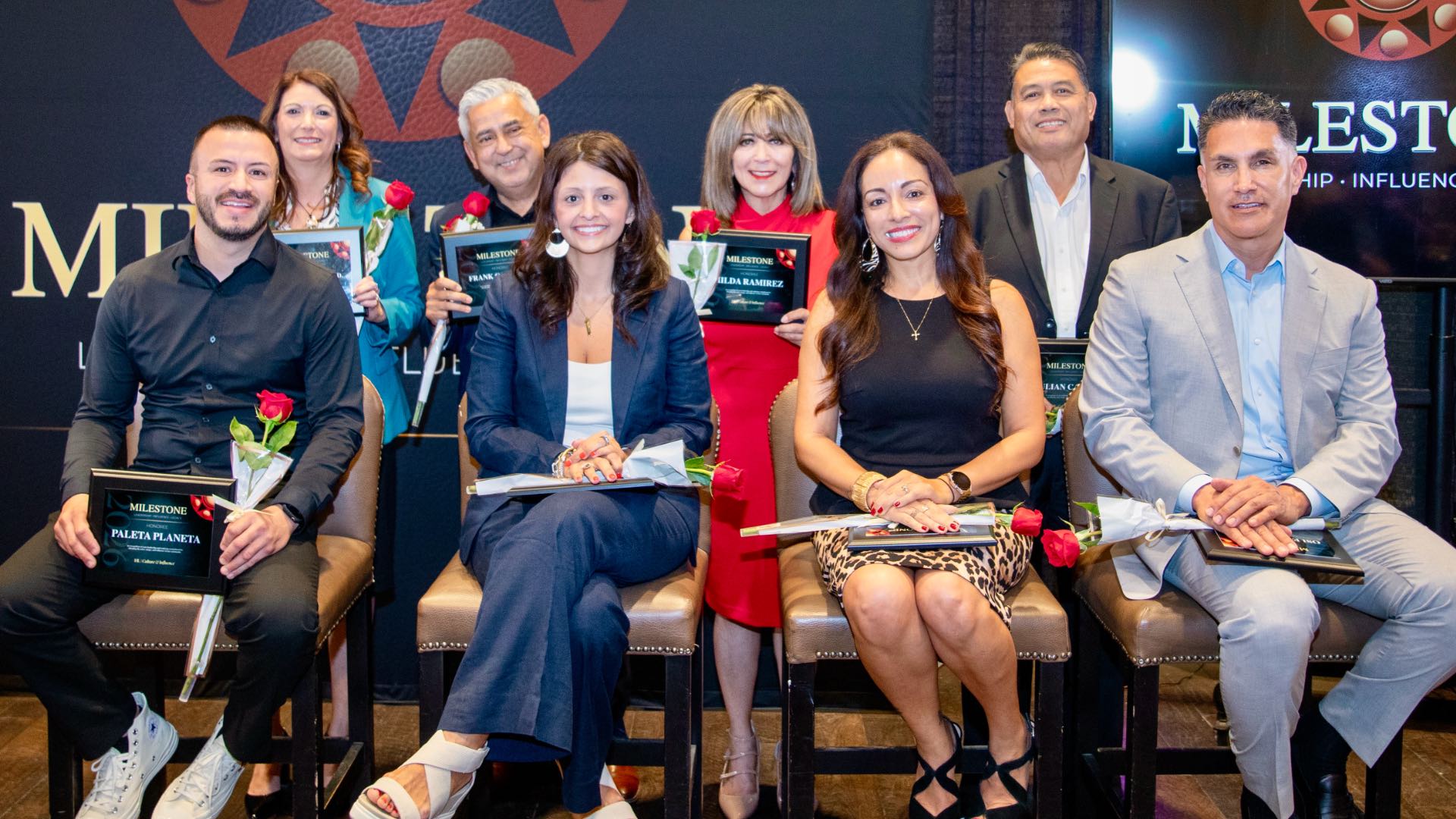
HL | Culture & Influence proudly announces the official Save the Date for the launch of its 2026 Milestone Series — Leadership • Influence • Legacy.

APRIL 30, 2026 – Orange County

The Orange County kickoff will take place on April 30, 2026, convening an invitation-only audience of accomplished business and community leaders for an elevated evening of recognition, conversation, and connection.

This event marks the first chapter of a national series designed to spotlight individuals who have reached defining moments in their professional and personal journeys leaders whose work is shaping business, community, and culture.

Nominations Are Now Open

HL is currently accepting nominations for the 2026 Milestone Series honorees in the Orange County region.

We are seeking individuals who demonstrate:

  1. Executive or entrepreneurial leadership
  2. Measurable business or community impact
  3. Cultural influence within their industry or region
  4. A legacy-building mindset

Nominations may be submitted by peers, colleagues, organizations, or self-nomination.

Nomination Process:

  • Submit a formal nomination through the HL nomination portal.
  • Include professional background, leadership highlights, and measurable impact.
  • Provide supporting materials such as bio, headshot, and relevant links.
  • All nominations will be reviewed by the HL editorial and advisory team.

Selected honorees will be notified directly and formally invited to participate in the April 30, 2026 recognition program.

Invitation-Only Policy

To preserve the integrity and impact of the Milestone Series, all HL events operate under an invitation-only policy.

Attendance at the Orange County Milestone event is extended exclusively to:

Invitations are issued directly by HL. This curated approach ensures an intentional environment focused on meaningful engagement, trusted relationships, and long-term influence.

Individuals interested in attending are encouraged to subscribe to HL updates and explore participation in the HL | Partner Network for priority consideration at future events.

A National Series Begins in Orange County

The April 30, 2026 event sets the tone for additional Milestone Series gatherings planned in key markets across the United States throughout the year.

“Milestones represent more than achievement,” says HL Founder Richard Sandoval. “They reflect the leadership, resilience, and influence that shape our communities and industries. This series honors those defining moments.”

Further details regarding venue, program highlights, and honorees will be announced in the coming months.

NOMINATION FORM

More Stories

The Sleeping Giant Has Awakened

The Sleeping Giant Has Awakened

The Sleeping Giant Has Awakened

The U.S. Hispanic Market Begins to Flex Its Muscles and Stretch Its Influence

By HL | Culture & Influence, Richard Sandoval

For decades, the U.S. Hispanic market was described as emerging, promising, or one to watch. Those labels no longer apply.

What we are witnessing today is not emergence it is arrival.

Across business, culture, media, and consumer spending, U.S. Hispanics are no longer waiting for permission to influence the mainstream. They are shaping it through purchasing power that rivals entire national economies, entrepreneurial momentum transforming local markets, and cultural authority redefining what America watches, listens to, eats, and aspires to.

The sleeping giant has awakened.

From Demographic to Economic Force

The U.S. Hispanic population now exceeds 63 million people, representing nearly one in five Americans. But population alone does not explain the shift underway.

What matters is economic gravity.

U.S. Hispanic buying power now surpasses $2 trillion annually placing it among the world’s largest economies if measured independently. That spending stretches across housing, automotive, travel, financial services, healthcare, education, luxury goods, and digital media.

Equally important is how that spending is deployed. Hispanic consumers today are increasingly intentional rewarding brands, institutions, and platforms that demonstrate understanding, respect, and long-term commitment.

HL Perspective

A Question Asked in 1997, Answered Today

When Hispanic Lifestyle launched in 1997, the caption on our very first cover asked a simple but uncomfortable question:

“Are Hispanic consumers taken for granted?”

Inland Empire Hispanic Lifestyle Magazine Cover – 1997

At the time, the U.S. Hispanic market was often described as emerging or  as the “sleeping giant.” The phrase acknowledged a growing population, rising buying power, and a critical labor force. But it also revealed a deeper truth: our community was recognized in theory, yet rarely treated with urgency or respect in practice.

Nearly three decades later, that question has answered itself.

The U.S. Hispanic market has grown into a $2 trillion economic force, become a majority population in multiple states, and emerged as one of the most influential drivers of American culture and commerce. What was once framed as potential is now power.

In a time marked by national frustration and uncertainty, the Super Bowl halftime moment featuring Bad Bunny felt deeply symbolic. What some labeled controversy became education. Millions were reminded that Puerto Rico is part of the United States, that Spanish is a domestic language spoken by millions of Americans, and that Hispanic culture is not adjacent to the mainstream it is embedded within it.

The sleeping giant did not wake up that night.

It simply reminded the country that it has always been here building, contributing, and influencing.

The Rise of the Affluent U.S. Hispanic Consumer

One of the most underreported dynamics in today’s economy is the rapid growth of affluent Hispanic households.

Latinas and Latinos are increasingly represented among:

  • Six-figure household incomes
  • Business owners, investors, and senior executives
  • Competitive homebuyers in urban and suburban markets
  • Consumers of premium, luxury, and experience-driven products

This is largely earned wealth, built through entrepreneurship, education, and multigenerational sacrifice. With that wealth comes a shift in mindset from access to agency, from visibility to ownership, and from consumption to legacy.

Brands still relying on outdated assumptions about price sensitivity or entry-level positioning are already behind.

Culture as an Economic Engine

Culture has always been the connective tissue of the Hispanic community. Today, it has become a powerful economic lever.

Hispanic influence is unmistakable across:

  • Music and live entertainment
  • Film, streaming, and bilingual storytelling
  • Food, hospitality, and experiential dining
  • Fashion, beauty, and lifestyle branding
  • Social platforms where culture travels faster than advertising

What has changed is control. Hispanic creators, founders, and executives are no longer just contributors they are owners, investors, and decision-makers.

Influence has moved upstream.

The Super Bowl Moment: When Culture Moves Markets

The Super Bowl has long been America’s biggest shared cultural moment. What stood out this year was not just viewership, but who activated around it.

Bad Bunny

Bad Bunny’s presence connected directly with U.S. Hispanic audiences sparking watch parties, family gatherings, social engagement, and a surge in digital conversation. Streaming activity spiked. Spanish-language and bilingual content surged in visibility. Communities turned a broadcast moment into a shared cultural experience.

This was not simply entertainment.
It was an economic multiplier.

In minutes, culture moved markets demonstrating that when Hispanic audiences engage, they do so collectively, intentionally, and at scale.

Business, Media, and the Cost of Standing Still

There is now a widening gap between organizations that engage the U.S. Hispanic market and those that merely acknowledge it.

The leaders are investing in:

  • Long-term relationships, not one-off campaigns
  • Leadership visibility, not surface-level representation
  • Storytelling and experiences that respect nuance, ambition, and influence

Those who fail to adapt risk more than missed opportunity they risk irrelevance.

The U.S. Hispanic market is no longer asking to be included.

It is deciding who earns access.

What Comes Next

The awakening of the U.S. Hispanic market marks a defining chapter in American business and culture one shaped by confidence, capital, and cultural authority.

For business leaders, media companies, and institutions, the question is no longer if this market matters.

The question is whether they are prepared to meet it at its current level of sophistication, scale, and influence.

The giant is awake and it is moving with purpose.

The U.S. Hispanic Market: 1997 → Today

From Overlooked to Unmistakable

1997 | The Question

“Are Hispanic consumers taken for granted?”

  • U.S. Hispanic population: ~29 million
  • Buying power: under $500 billion
  • Hispanic media largely niche and underfunded
  • Spanish-language marketing treated as “add-on,” not strategy
  • Latino influence acknowledged but rarely prioritized

Hispanic Lifestyle launches amid questions of visibility and respect.

2000–2010 | The Foundation

  • Population growth accelerates nationwide
  • Hispanic labor force becomes essential to:
  • Construction
  • Agriculture
  • Hospitality
  • Manufacturing
  • Latino homeownership rises sharply
  • Spanish-language television gains national scale

The giant is building but still underestimated.

2010–2019 | The Shift

  • U.S. Hispanic population surpasses 50 million
  • Latino-owned businesses grow at 2–3× the national average
  • Buying power approaches $1.7 trillion
  • Streaming, music, and digital platforms amplify Latino voices
  • Younger Latinos reshape pop culture, language, and trends

From participation to influence.

2020–2024 | The Acceleration

  • Hispanics drive:
    • Workforce recovery
    • Small business creation
    • Housing demand in key markets
  • Spanish becomes a dominant language in U.S. digital culture
  • Latino creators and entrepreneurs move into ownership roles
  • Cultural moments increasingly originate from Hispanic communities

Influence moves upstream.

Today | The Reality

  • Population: 63+ million (nearly 1 in 5 Americans)
  • Buying power: $2+ trillion annually
  • Latinos represent a majority population in multiple U.S. states
  • Hispanic consumers span:
    • Entry-level to affluent
    • Blue-collar to executive leadership
    • First-generation to multi-generational wealth

According to the U.S. Census Bureau, Hispanics are now one of the most influential demographic, economic, and cultural forces shaping America’s future.

2026 and Beyond | What’s Different Now

  • The market is no longer asking to be seen
  • Brands no longer control the narrative
  • Cultural relevance now equals economic power

The sleeping giant hasn’t just awakened  it has learned how to move markets.

    More Stories

    Expanding Financial Access in Underinvested Communities

    Expanding Financial Access in Underinvested Communities

    Expanding Financial Access in Underinvested Communities

    How a $75 million federal investment is driving education, healthcare, and long-term economic mobility

    Access to capital remains one of the most powerful drivers of long-term wealth creation and economic stability. This month, City First Bank announced it has been awarded a $75 million New Markets Tax Credit (NMTC) allocation from the Community Development Financial Institutions Fund (CDFI Fund)—a significant infusion of federal investment aimed at accelerating economic growth in underinvested communities across the United States.

    The New Markets Tax Credit program is designed to channel private capital into projects that traditional financing often overlooks. For City First Bank, the latest allocation builds on a proven track record. Since the program’s inception, the bank has deployed $548 million in NMTC financing, supporting 54 projects focused primarily on education and healthcare infrastructure—two sectors closely tied to upward economic mobility and long-term community wealth.

    “This allocation is catalytic,” said Brian Argrett, President and CEO of City First Bank. “It enables us to partner with mission-driven organizations and deliver capital where it can create durable, generational impact.”

    Capital as a Tool for Economic Mobility

    From a finance and wealth perspective, NMTC allocations represent more than community investment—they are a strategic mechanism for reducing systemic capital gaps. By supporting schools, healthcare facilities, and nonprofit institutions in low-income areas, these investments help stabilize neighborhoods, attract additional private funding, and expand access to essential services that underpin workforce participation and small business growth.
    City First Bank’s approach reflects a growing shift within values-driven banking: deploying structured capital to unlock long-term economic returns that extend beyond quarterly profit metrics.

    Strengthening Governance and Oversight

    As part of its continued expansion, City First Bank also announced new appointments to its NMTC Advisory Council, reinforcing its commitment to disciplined investment and community-centered strategy:

    • Desmond Marshall, a Chicago-based community development leader with extensive experience scaling mission-driven organizations
    • Dr. Marla Dean, a Washington, D.C.–based nonprofit strategist with deep expertise in education and next-generation economic mobility models

    Their additions bring increased oversight and sector-specific insight at a time when demand for impact-focused capital continues to rise.

    The Bigger Picture for Finance and Wealth

    For financial institutions, investors, and policymakers, the latest NMTC allocation highlights how federal tools—when paired with experienced community lenders—can serve as catalysts for inclusive growth. As conversations around equitable finance and access to capital evolve, programs like NMTC remain central to expanding opportunity in communities historically left outside traditional banking systems.

    About City First Bank

    City First Bank provides commercial lending, financial services, and deposit products that support affordable housing, small businesses, and nonprofit community facilities in underinvested neighborhoods. The bank is a Community Development Financial Institution (CDFI), a Certified B Corporation, and a member of the Global Alliance for Banking on Values.
Member FDIC | Equal Housing Lender

    More Stories