
When Local Voices Go Silent
HL | Culture and Influence
When Local Voices Go Silent
What radio loses when consolidation, automation and changing habits separate broadcasters from the communities they served.
Photos and article by
Richard Sandoval
 arly in my career, I spent at least an hour a day in the car, commuting from suburbia into the city. Radio was my companion.
I listened to morning shows, talk radio and, occasionally, music. I wanted to know what was happening in the world, but music provided another kind of connection. Having played several instruments in high school and performed in a band, I wanted to know what people were listening to and where musical tastes were heading.
Growing up in the Bay Area, I remember personalities such as Dr. Donald D. Rose with KFRC. I remember listening to sports radio on KNBR and hearing voices that seemed to belong not merely to a station, but to the entire region. This was during the late 1970s and 1980s, when local radio personalities helped set the rhythm of the day.
They told us what had happened overnight. They made us laugh during the morning commute. They talked about our teams, our neighborhoods, our weather and the events taking place around us. Even when we had never met them, we felt as though we knew them.
Years later, I found myself in Southern California, once again spending considerable time on the freeways, traveling into the Coachella Valley. I listened to a young broadcaster named Chris Kimmel who would later become known as Jimmy Kimmel and his sidekick, Carson Daly.
There is a wonderful personal story from that period involving Jimmy explaining the birds and the bees to my son Christopher. He later took me to lunch and managed to eat an entire pizza by himself.
This was before television fame. And I am not going to lie it was very good pizza.
These memories may sound like amusing detours, but they help explain what made local radio special. The people behind the microphones became part of our lives. They were not anonymous voices delivering interchangeable programming from somewhere else. They lived in the market. They understood its personality. In some cases, their listeners watched their careers develop in real time.
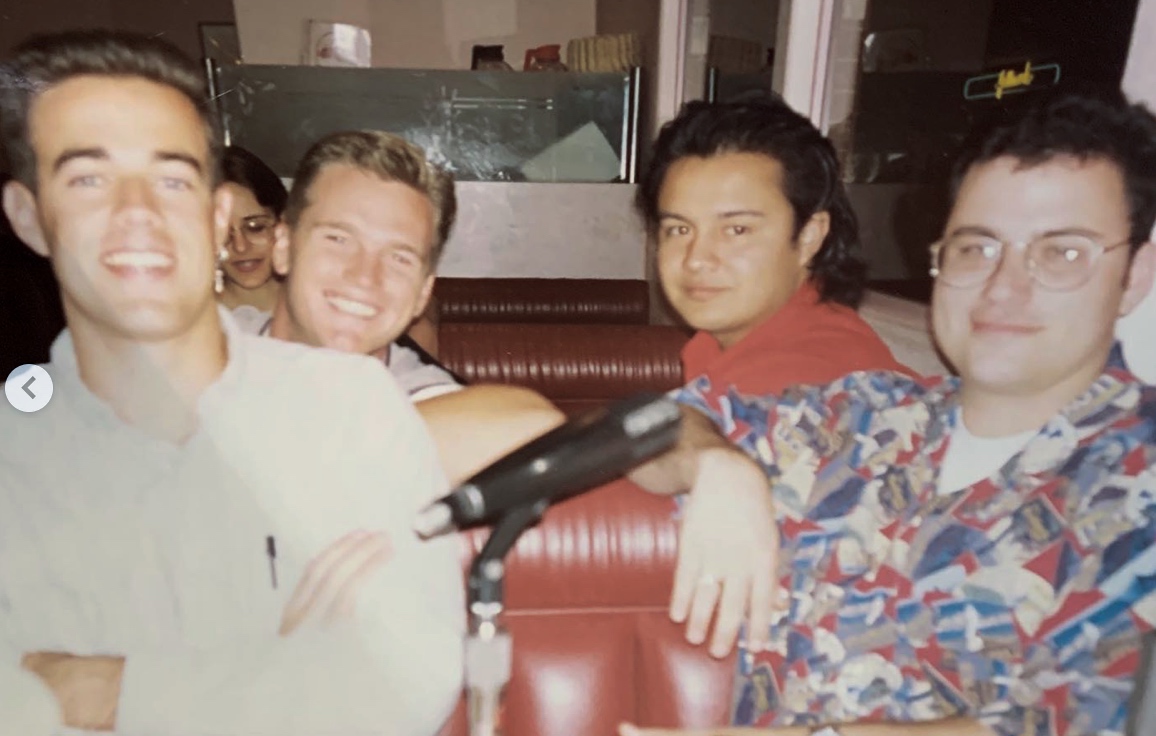
Photo taken around the timeframe of when they worked at a Palm Springs radio station. Front row: Kit Carson (Carson Daly) and Chris Kimmel (Jimmy Kimmel). Photo credit: Instagram.
The people behind the voices
Over the years, perhaps because I entered the media business myself, I became friends with several local DJs, news personalities and talk-radio hosts.
I met Evelyn Erives when she was still in high school and watched her build a long career at KGGI before being laid off recently. Hispanic Lifestyle recognized another local personality, Vic Slick, whose work introduced listeners to old-school music and the memories attached to it.
My longtime friend Syeda Jafri worked in morning talk radio and later at KCAL-FM before she, too, was recently laid off. Lacey Kendall is another colleague I met years ago when she was hosting a talk-radio program. We later worked together on a nightly television newscast serving the Inland Valley.
These are only a few of the people I have met during more than three decades in media. Some began in radio and moved into other areas. Others remained because radio was where they wanted to be.
They loved entertaining people. They loved sharing information, playing music and connecting with their communities. Some may also have chosen to remain in local markets because they were raising families and building lives there.
That is an important part of this story.
When a local radio personality disappears from the air, a company may view it as a staffing decision. For listeners, however, a familiar part of their community has gone silent.
The Business Reality
Radio has always been a difficult business. Stations are bought and sold. Companies consolidate. Formats change. Advertising revenue shifts. Contracts end. Bankruptcies occur. Owners must adapt to new technology and changing audience behavior.
Automation has made it possible for fewer people to operate more stations. Programming can be produced in another city and distributed across multiple markets. Artificial intelligence will likely expand those capabilities even further.
From a business perspective, some of those decisions may appear necessary. But efficiency carries a cost when it removes the people who understand the communities being served.
A prerecorded voice can announce the name of the next song. A syndicated program can fill several hours of airtime. An algorithm can assemble a playlist.
But can any of them understand why a local high school championship matters? Can they speak naturally about the restaurant that everyone in town knows, the freeway closure changing the morning commute, the community fundraiser that needs attention or the emotional aftermath of a hometown team’s win or loss?
Local radio did more than transmit sound. It reflected a place back to the people who lived there.
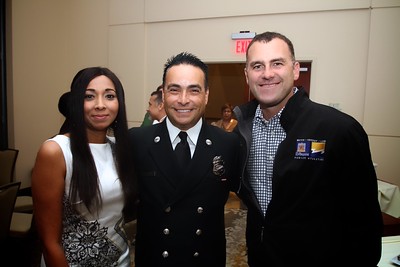
Syeda Jafri, Hispanic Lifestyle honoree David Hernandez and
Mayor of Riverside Rusty Baily
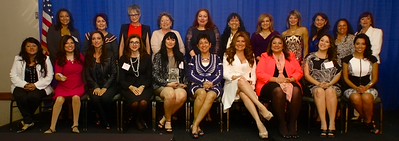
Pictured among Hispanic Lifestyle’s 2015 Latinas of Influence is
Evelyn Erives (seated, second from right).
I Changed, Too
If I am being honest, it is now rare for me to tune in to local radio.
I listen to SiriusXM and podcasts. I do not spend as much time driving as I once did. When I am in the car, I am often on the phone connecting with people. My habits have changed because my lifestyle has changed.
Millions of people could probably say the same thing.
We gained more choices, greater control and access to programming from almost anywhere. But as our listening became increasingly personalized, we may have lost some of the shared experience that local radio once provided.
There was a time when thousands of people across a region heard the same joke, debated the same comment or listened together as a local announcer described an important moment. Radio created a kind of common room for a community.
Today, each of us can occupy a media room of our own.
A lesson from the Rick Dees
Several years ago, we interviewed nationally recognized radio personality Rick Dees. I will need to revisit our archives to confirm the exact date, but I believe it was around August 2001.
When we entered the studio, I noticed advertisements promoting the station’s new morning-show personality. The announcement had been made only a few days earlier, following the departure of George Lopez.
What struck me was how quickly the transition appeared to happen. The promotional campaign was ready. The replacement had apparently been planned. The station had already moved forward.
At the time, I knew very little about how radio contracts were structured or the business considerations behind these decisions. I am sure there were reasons for the change. Still, George Lopez was one of the first high-profile Latino comedians to lead a major morning radio program, and his departure felt like more than a programming adjustment. To many people in Southern California’s Latino community, it felt as though one of our most visible voices had suddenly been removed.
That experience taught me something about media: what audiences experience as an abrupt and emotional loss may have been treated inside the company as a carefully planned business transition.
The show goes on but not always with the same connection.
Why I did not ask for quotes
I considered calling several friends and colleagues who have recently been displaced and asking them to share their thoughts for this article.
I decided not to put them on the spot.
Some may still be processing what happened. Some are looking for their next opportunity. Others may be restricted by severance agreements or simply may not be ready to publicly discuss an employer that had been part of their lives for many years.
Their silence should not be mistaken for a lack of feeling.
For someone accustomed to waking before sunrise, preparing for a morning show and directing that energy toward thousands of listeners, suddenly having no microphone and no audience must create a profound sense of disruption.
The obvious suggestion is that these experienced personalities should start podcasts or online streaming programs. Some probably will. But recreating the radio experience is not as easy as setting up a microphone and pressing “go live.”
Listeners came for a complete experience: music, conversation, humor, information and companionship. Producing that experience independently requires technology, promotion, distribution and, when music is involved, licensing. Talent alone does not provide the infrastructure that a radio station once supplied.
What happens when local voices disappear?
Consolidation may preserve a company. Automation may reduce operating costs. Syndication may make programming more efficient.
But who remains responsible for listening to the community?
Who introduces the new local artist, supports the neighborhood organization, recognizes the small business, talks about the hometown team or gives attention to an issue before it becomes national news?
The question is not whether radio should resist every technological change. That would be unrealistic. The question is whether efficiency must require the removal of local identity.
When local voices go silent, communities do not simply lose broadcasters. They lose witnesses people who have been listening, observing and helping a region understand itself.
EDITOR NOTES
I love radio.
There is still something special about listening to a ball game and then hearing the announcers and fans react on the way home after a win or a loss. It is a habit I have held onto because radio can make a shared moment feel personal.
Radio also remains one of the simplest expressions of free choice. If you do not like what a broadcaster is saying, you can turn the dial. Another voice is only a station away.
What concerns me is not that listeners have fewer channels. We have more choices than ever. What concerns me is that fewer of those voices may actually come from the communities they are addressing.
I look forward to seeing what comes next for my friends and colleagues. They are talented. They are experienced. They are innovators. They know how to inform, entertain and create meaningful connections with an audience.
Their voices have not disappeared.
For the moment, some of the microphones that carried them have simply been turned off. I look forward to the day when we and the communities they have served hear those voices again.

Cover of Hispanic Lifestyle Magazine 2002





 here are moments in every journey when you realize your perspective has changed.



 uilding on Three Decades of Trusted Storytelling