
Defining Wealth in Silicon Valley

Defining Wealth in Silicon Valley

HL | Wealth Report

Defining Wealth in Silicon Valley

Latinos are emerging as one of the region’s most influential growth segments shaping wealth through education, ownership, technology, real estate, entrepreneurship, leadership, and culture.

Photos and article by
Richard Sandoval

ilicon Valley is often defined by technology, venture capital, innovation, and global wealth creation. It is a region known for producing ideas, companies, and industries that influence the world.

But the definition of wealth in Silicon Valley is changing.

Wealth is no longer measured only by market valuations, stock options, executive titles, or access to capital. Wealth is also measured by education, ownership, home equity, business growth, leadership, cultural influence, access to networks, and the ability to create opportunity for the next generation.

For the Latino community, this broader definition matters.

“The data gives us context. The leaders give us proof. The stories give us meaning.”

Latinos are not simply participating in the Silicon Valley economy. They are helping shape its future through business ownership, institutional leadership, real estate, technology, workforce development, financial services, entrepreneurship, and culture-driven brands.

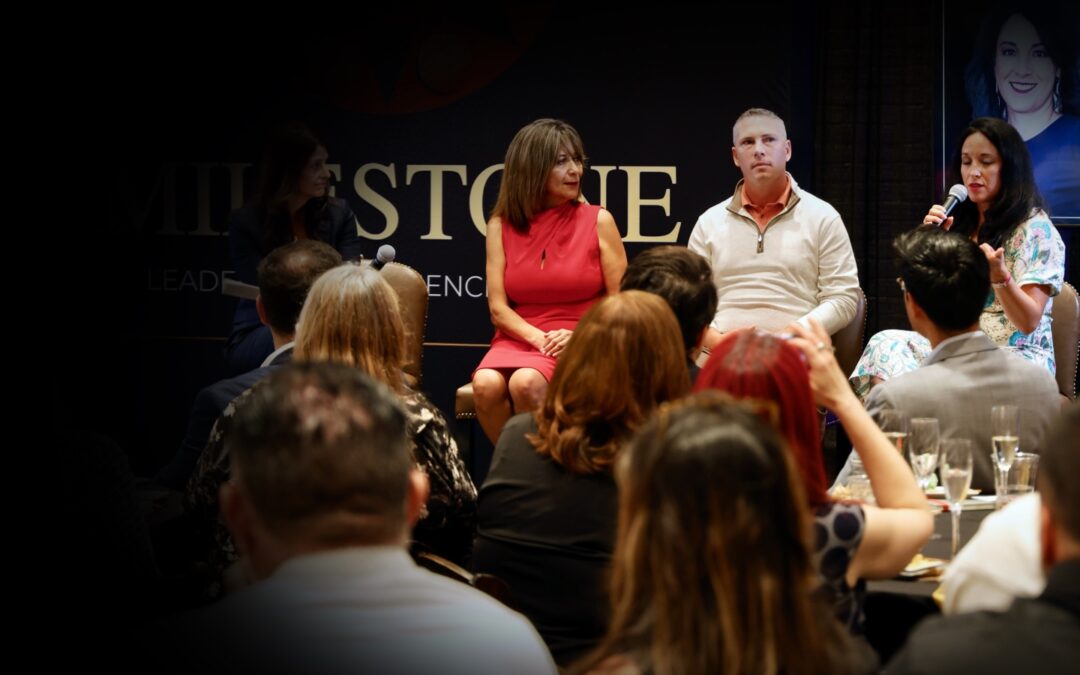
That was the larger conversation reflected at the HL | Milestone Series Silicon Valley event, where Hispanic Lifestyle recognized leaders whose stories represent a more complete view of wealth, influence, and legacy.
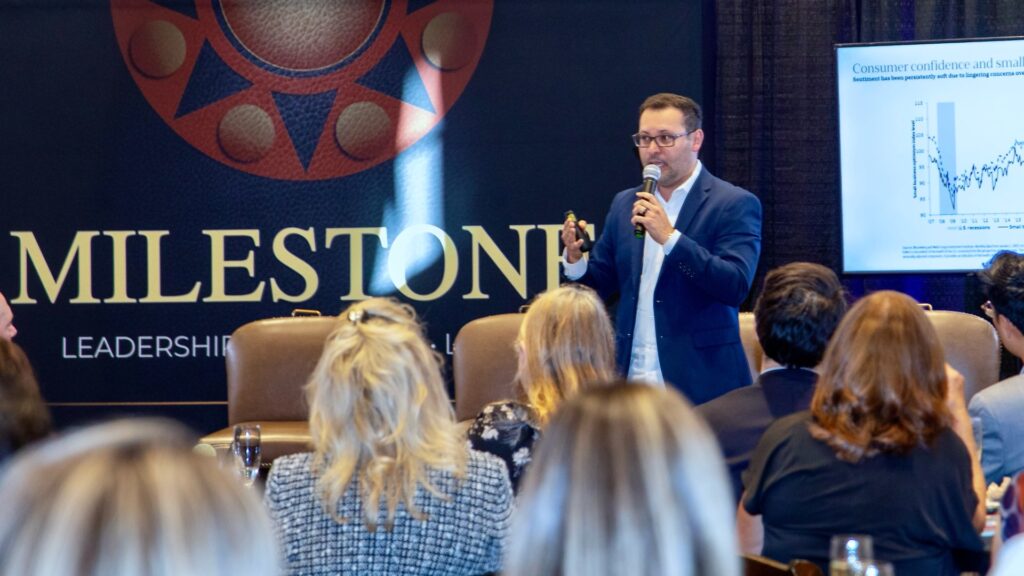
The evening also included remarks from Luis D. Alvarado of Wells Fargo, who helped frame the economic environment through insights connected to the Wells Fargo Investment Institute’s 2026 Midyear Outlook. The report’s theme, “Keeping discipline in noisy markets,” speaks directly to this moment. It points to a world being shaped by artificial intelligence, geopolitical uncertainty, inflation, energy prices, interest rates, and long-term structural change.

For Hispanic Lifestyle (HL), the takeaway is not investment advice.  The takeaway is context.

Serious conversations about wealth require serious information. They require trusted research, responsible interpretation, and a clear understanding of how economic forces affect families, entrepreneurs, professionals, homeowners, and communities.

That is the purpose of the HL Wealth Report.

We are not telling readers what to invest in. We are highlighting credible research, connecting it to Latino wealth and influence, and encouraging our audience to think more deeply about the forces shaping their future.

In Silicon Valley, one of the clearest forces is artificial intelligence.

According to the Wells Fargo Investment Institute’s 2026 Midyear Outlook, AI and other technology spending are helping shift economic growth from consumer-led activity toward investment-led growth. That includes data centers, power, technology infrastructure, electronic structures, information-processing equipment, and software.

Through the HL lens, this is not only a technology story.

It is a Latino wealth story.

Who will build the next generation of infrastructure?
Who will finance it?
Who will lead the companies connected to it?
Who will prepare the workforce?
Who will own businesses that serve this new economy?
Who will help families understand the opportunities and risks that come with economic change?

These are the questions that matter.

The Wells Fargo outlook also notes that larger companies often have advantages in uncertain markets because they tend to have stronger pricing power, less credit sensitivity, and broader access to financing. That point is especially relevant to Latino entrepreneurs and small business owners. Inspiration alone does not scale a business. Capital readiness, financial relationships, strategic planning, and access to trusted networks matter.
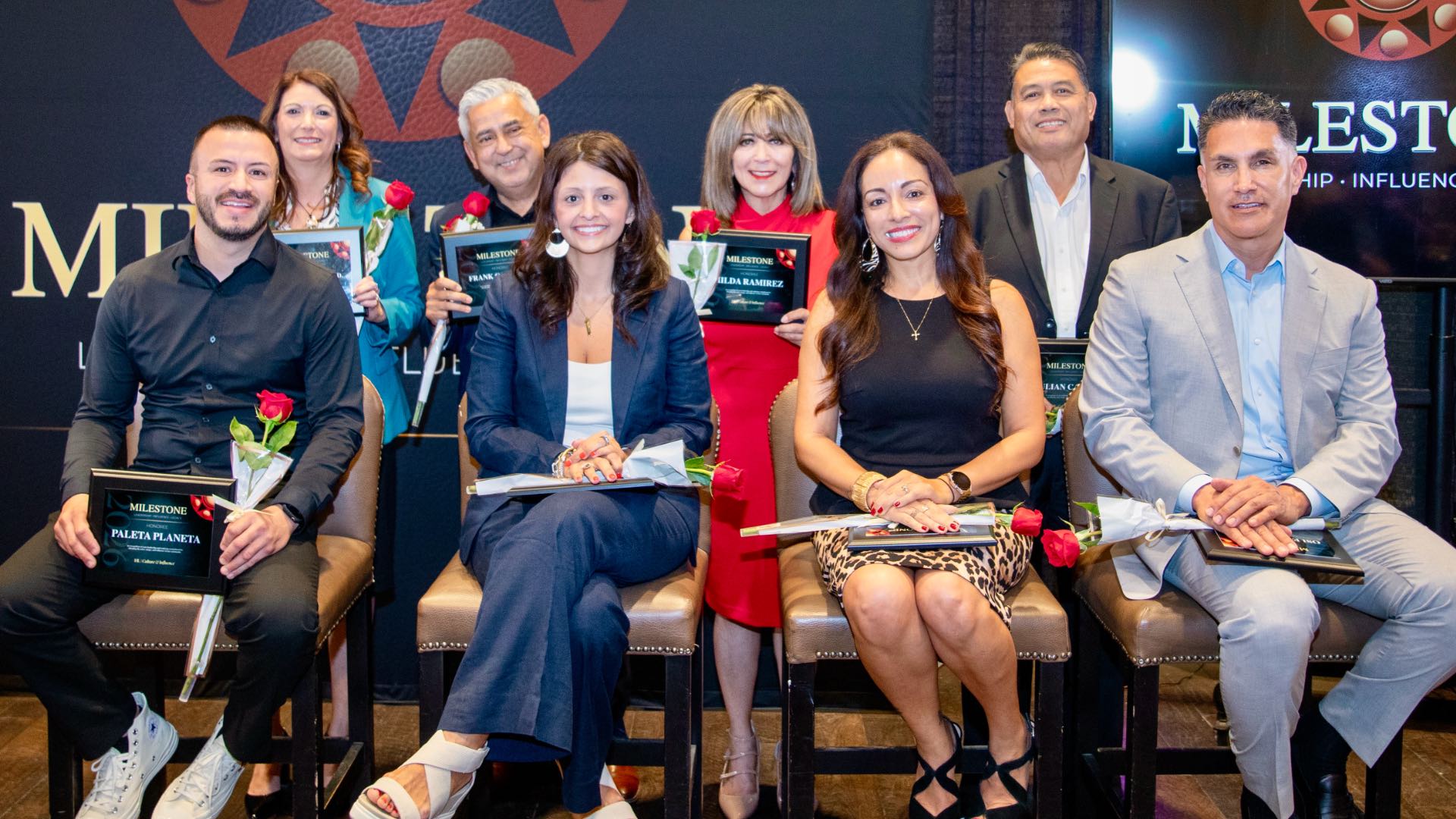
HL | Milestone Honorees recognized in Silicon Valley on June 17, 2026.

Back row: Dr. Marilyn Flores, President of San José City College; Frank Carbajal, Founder of Es Tiempo and the Silicon Valley Latino Leadership Summit; Hilda Ramirez, CEO and Team Leader of Keller Williams Silicon City; and Julian Cañete, President and CEO of the California Hispanic Chambers of Commerce.

Front row: Mauricio, Gabriel and Luis, Founders of Paleta Planeta; Gloria Mirazo Gregor, Senior Market Manager, Wells Fargo; Jazmin Diaz, Founder of Flourish Learning & Development; and Javier Diaz, Founder and CEO of OSI Engineering.

This is where Latino wealth must be understood beyond individual success stories.

The community needs more than visibility. It needs infrastructure.

“Latinos are not a one-size-fits-all market. They are homeowners, investors, executives, founders, creators, travelers, philanthropists, educators, and decision-makers. They are building companies, buying homes, leading institutions, influencing culture, and creating legacy.”

Latino wealth in Silicon Valley is not a future possibility. It is already present.

It is present in education.
It is present in real estate.
It is present in business ownership.
It is present in technology.
It is present in leadership networks.
It is present in financial institutions.
It is present in culture-driven entrepreneurship.
It is present in the families and professionals building legacy one decision at a time.

The opportunity now is to frame these stories properly.

For too long, successful Latino stories have been presented only as inspirational journeys. Inspiration matters, but it is not enough. These stories are also business case studies. They are evidence of a growing consumer segment, a rising professional class, an entrepreneurial engine, and a community with purchasing power, cultural influence, and generational ambition.

This is why brands, financial institutions, real estate developers, technology companies, civic leaders, and luxury companies should pay attention.

Latinos are not a one-size-fits-all market. They are homeowners, investors, executives, founders, creators, travelers, philanthropists, educators, and decision-makers. They are building companies, buying homes, leading institutions, influencing culture, and creating legacy.

Silicon Valley’s next chapter will not be defined by technology alone.

It will be defined by who has access to opportunity.

Who owns businesses.
Who leads institutions.
Who understands capital.
Who builds networks.
Who prepares the next generation.
Who tells the story.

That is why the HL Wealth Report matters.

It allows Hispanic Lifestyle to connect trusted research, real community leadership, and culturally relevant storytelling in a way that extends the conversation beyond the event room.

The data gives us context.
The leaders give us proof.
The stories give us meaning.

Latinos are emerging as one of Silicon Valley’s most influential growth segments.

And the future they are building is already here.

EDITOR NOTES 

HL Wealth Report is an editorial feature from HL | Culture and Influence  focused on wealth, ownership, leadership, and influence in the Latino community. This content is for informational and editorial purposes only and does not provide investment, legal, tax, or financial advice.

Readers should consult qualified professionals before making personal financial decisions.

Additional photos taken at the HL | Milestone Silicon Valley event were taken Lilith Sanchez

The Sleeping Giant Has Awakened

The Sleeping Giant Has Awakened

The Sleeping Giant Has Awakened

The U.S. Hispanic Market Begins to Flex Its Muscles and Stretch Its Influence

By HL | Culture & Influence, Richard Sandoval

For decades, the U.S. Hispanic market was described as emerging, promising, or one to watch. Those labels no longer apply.

What we are witnessing today is not emergence it is arrival.

Across business, culture, media, and consumer spending, U.S. Hispanics are no longer waiting for permission to influence the mainstream. They are shaping it through purchasing power that rivals entire national economies, entrepreneurial momentum transforming local markets, and cultural authority redefining what America watches, listens to, eats, and aspires to.

The sleeping giant has awakened.

From Demographic to Economic Force

The U.S. Hispanic population now exceeds 63 million people, representing nearly one in five Americans. But population alone does not explain the shift underway.

What matters is economic gravity.

U.S. Hispanic buying power now surpasses $2 trillion annually placing it among the world’s largest economies if measured independently. That spending stretches across housing, automotive, travel, financial services, healthcare, education, luxury goods, and digital media.

Equally important is how that spending is deployed. Hispanic consumers today are increasingly intentional rewarding brands, institutions, and platforms that demonstrate understanding, respect, and long-term commitment.

HL Perspective

A Question Asked in 1997, Answered Today

When Hispanic Lifestyle launched in 1997, the caption on our very first cover asked a simple but uncomfortable question:

“Are Hispanic consumers taken for granted?”

Inland Empire Hispanic Lifestyle Magazine Cover – 1997

At the time, the U.S. Hispanic market was often described as emerging or  as the “sleeping giant.” The phrase acknowledged a growing population, rising buying power, and a critical labor force. But it also revealed a deeper truth: our community was recognized in theory, yet rarely treated with urgency or respect in practice.

Nearly three decades later, that question has answered itself.

The U.S. Hispanic market has grown into a $2 trillion economic force, become a majority population in multiple states, and emerged as one of the most influential drivers of American culture and commerce. What was once framed as potential is now power.

In a time marked by national frustration and uncertainty, the Super Bowl halftime moment featuring Bad Bunny felt deeply symbolic. What some labeled controversy became education. Millions were reminded that Puerto Rico is part of the United States, that Spanish is a domestic language spoken by millions of Americans, and that Hispanic culture is not adjacent to the mainstream it is embedded within it.

The sleeping giant did not wake up that night.

It simply reminded the country that it has always been here building, contributing, and influencing.

The Rise of the Affluent U.S. Hispanic Consumer

One of the most underreported dynamics in today’s economy is the rapid growth of affluent Hispanic households.

Latinas and Latinos are increasingly represented among:

  • Six-figure household incomes
  • Business owners, investors, and senior executives
  • Competitive homebuyers in urban and suburban markets
  • Consumers of premium, luxury, and experience-driven products

This is largely earned wealth, built through entrepreneurship, education, and multigenerational sacrifice. With that wealth comes a shift in mindset from access to agency, from visibility to ownership, and from consumption to legacy.

Brands still relying on outdated assumptions about price sensitivity or entry-level positioning are already behind.

Culture as an Economic Engine

Culture has always been the connective tissue of the Hispanic community. Today, it has become a powerful economic lever.

Hispanic influence is unmistakable across:

  • Music and live entertainment
  • Film, streaming, and bilingual storytelling
  • Food, hospitality, and experiential dining
  • Fashion, beauty, and lifestyle branding
  • Social platforms where culture travels faster than advertising

What has changed is control. Hispanic creators, founders, and executives are no longer just contributors they are owners, investors, and decision-makers.

Influence has moved upstream.

The Super Bowl Moment: When Culture Moves Markets

The Super Bowl has long been America’s biggest shared cultural moment. What stood out this year was not just viewership, but who activated around it.

Bad Bunny

Bad Bunny’s presence connected directly with U.S. Hispanic audiences sparking watch parties, family gatherings, social engagement, and a surge in digital conversation. Streaming activity spiked. Spanish-language and bilingual content surged in visibility. Communities turned a broadcast moment into a shared cultural experience.

This was not simply entertainment.
It was an economic multiplier.

In minutes, culture moved markets demonstrating that when Hispanic audiences engage, they do so collectively, intentionally, and at scale.

Business, Media, and the Cost of Standing Still

There is now a widening gap between organizations that engage the U.S. Hispanic market and those that merely acknowledge it.

The leaders are investing in:

  • Long-term relationships, not one-off campaigns
  • Leadership visibility, not surface-level representation
  • Storytelling and experiences that respect nuance, ambition, and influence

Those who fail to adapt risk more than missed opportunity they risk irrelevance.

The U.S. Hispanic market is no longer asking to be included.

It is deciding who earns access.

What Comes Next

The awakening of the U.S. Hispanic market marks a defining chapter in American business and culture one shaped by confidence, capital, and cultural authority.

For business leaders, media companies, and institutions, the question is no longer if this market matters.

The question is whether they are prepared to meet it at its current level of sophistication, scale, and influence.

The giant is awake and it is moving with purpose.

The U.S. Hispanic Market: 1997 → Today

From Overlooked to Unmistakable

1997 | The Question

“Are Hispanic consumers taken for granted?”

  • U.S. Hispanic population: ~29 million
  • Buying power: under $500 billion
  • Hispanic media largely niche and underfunded
  • Spanish-language marketing treated as “add-on,” not strategy
  • Latino influence acknowledged but rarely prioritized

Hispanic Lifestyle launches amid questions of visibility and respect.

2000–2010 | The Foundation

  • Population growth accelerates nationwide
  • Hispanic labor force becomes essential to:
  • Construction
  • Agriculture
  • Hospitality
  • Manufacturing
  • Latino homeownership rises sharply
  • Spanish-language television gains national scale

The giant is building but still underestimated.

2010–2019 | The Shift

  • U.S. Hispanic population surpasses 50 million
  • Latino-owned businesses grow at 2–3× the national average
  • Buying power approaches $1.7 trillion
  • Streaming, music, and digital platforms amplify Latino voices
  • Younger Latinos reshape pop culture, language, and trends

From participation to influence.

2020–2024 | The Acceleration

  • Hispanics drive:
    • Workforce recovery
    • Small business creation
    • Housing demand in key markets
  • Spanish becomes a dominant language in U.S. digital culture
  • Latino creators and entrepreneurs move into ownership roles
  • Cultural moments increasingly originate from Hispanic communities

Influence moves upstream.

Today | The Reality

  • Population: 63+ million (nearly 1 in 5 Americans)
  • Buying power: $2+ trillion annually
  • Latinos represent a majority population in multiple U.S. states
  • Hispanic consumers span:
    • Entry-level to affluent
    • Blue-collar to executive leadership
    • First-generation to multi-generational wealth

According to the U.S. Census Bureau, Hispanics are now one of the most influential demographic, economic, and cultural forces shaping America’s future.

2026 and Beyond | What’s Different Now

  • The market is no longer asking to be seen
  • Brands no longer control the narrative
  • Cultural relevance now equals economic power

The sleeping giant hasn’t just awakened  it has learned how to move markets.

    More Stories