
Milestone | Patricia Pérez: Setting the Standard

Milestone | Patricia Pérez: Setting the Standard

HL | Culture and Influence

Milestone | Patricia Pérez: Setting the Standard

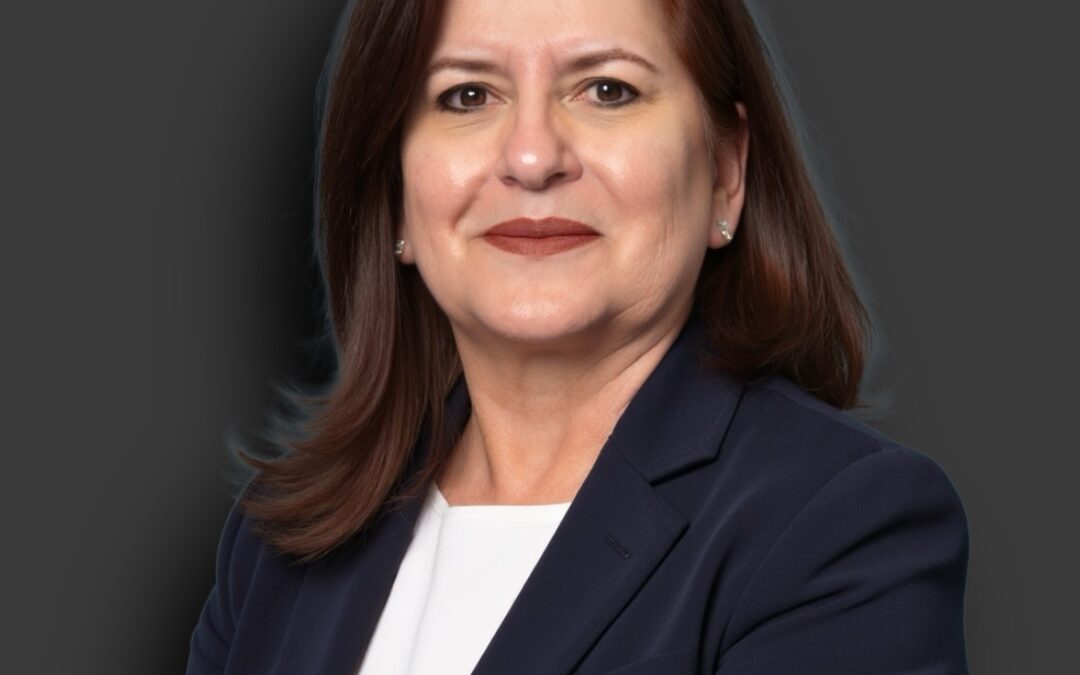
HL Media Network congratulates longtime communications executive, community advocate and 2017 Hispanic Lifestyle Latina of Influence Patricia Pérez as she begins a new chapter following nearly four decades with VPE Communications.

Photos and article by
Richard Sandoval

ome moments deserve to be recognized as milestones. Patricia Pérez’s retirement from VPE Communications is one of them.

For nearly four decades, Patricia built a career in public relations and communications connecting major corporations, public agencies and organizations with the U.S. Hispanic market. Just as importantly, she remained actively engaged with the community-based organizations and causes serving many of those same communities.

As Patricia begins her next chapter, we want to say something very simple:
Congratulations on a job well done. You have built a career to be proud of and thank you for your many years of service to our community.

A Career Built on Relationships

My memories of Patricia go back many years.

I remember crossing paths with her at numerous community events over the years. Her name would often appear on the boards of organizations and community-based initiatives, and there would be many more events, meetings and opportunities to watch Patricia and VPE at work.

Her professional career put her in the company of major brands and organizations. VPE’s client history has included organizations such as Disneyland, McDonald’s, AT&T and Farmers Insurance, along with numerous government agencies and community organizations.

That professional record speaks for itself.

But when I think about Patricia, some of the things I remember most didn’t happen from a stage or in front of a camera.

I remember the conversations.

Patricia was one of those people with whom you could have a quiet conversation and walk away with a new perspective.

She might share an insight, make a suggestion or point out something you hadn’t considered. These were valuable pieces of information coming from someone with years of experience who was willing to share some of what she had learned along the way.

There was never much fanfare surrounding those moments.

It was simply good advice.

And I appreciated it.

Serving the Market and the Community

Patricia’s career also represents an important chapter in the evolution of communications with the U.S. Hispanic market.

Through VPE, she helped bring stories, information and campaigns to the attention of audiences that historically had often been underserved or overlooked.

That work required more than delivering a message. It required understanding the communities those messages were intended to reach.

Patricia understood that distinction.

She wasn’t simply communicating to the community. She was active in the community.

Throughout her career, she contributed her time, experience and leadership to community-based organizations, civic efforts and causes. That involvement provided a perspective that couldn’t simply be learned by studying demographics or reading a marketing report.

She knew the people. She knew the organizations. She understood the marketplace and she understood the value of relationships.
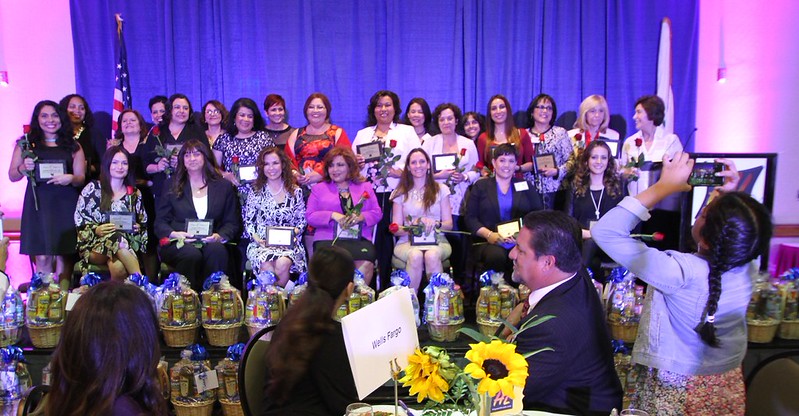
Pictured among Hispanic Lifestyle’s 2017 Latinas of Influence is
Patricia Perez (is standing in the back row).

Documenting the Journey

For more than three decades, our cameras, microphones and pages have documented the people and organizations influencing our communities.

Patricia and VPE are part of that history.

VPE Communications was recognized through Hispanic Lifestyle’s Business: Surviving to Thriving series, which celebrated businesses demonstrating longevity, adaptability and the ability to grow through changing economic conditions and marketplaces.

In 2017, Hispanic Lifestyle recognized Patricia Pérez as a Latina of Influence, acknowledging her professional accomplishments, leadership and commitment to community.

That year, we also sat down with Patricia for an interview, giving her an opportunity to share some of her experiences and perspective in her own words.

Setting the Standard

There is another part of Patricia’s career worth recognizing.

She demonstrated that it was possible to operate at the highest levels of the communications industry, work with major corporate and institutional clients, and remain genuinely connected to the community.

That matters.

Influence isn’t simply about having access to important rooms. It’s also about what you bring into those rooms, the perspectives you represent and what you do with the opportunities you’ve earned.

Patricia helped set that standard.

Her retirement also represents another measure of professional success:

What she helped build continues.

VPE Communications now enters its next chapter under the leadership of longtime VPE professionals Maricela Cueva and Lorena Alamillo. Their opportunity is to build upon a foundation developed over nearly four decades while defining what comes next for the organization.

We look forward to documenting that journey.

A Milestone Worth Recognizing

We often talk about standing on the shoulders of the people who came before us.

People like Patricia helped create a foundation upon which others can continue to build.

They opened doors. They developed relationships. They demonstrated the importance and economic influence of the U.S. Hispanic market. They gave their time and experience to organizations and communities.

And sometimes, away from the cameras and microphones, they quietly shared what they had learned with someone else who could benefit from their experience.

The responsibility for those who follow isn’t simply to admire what was built.

It is to build upon it.

That’s how influence continues.

That’s how a legacy grows.

And that’s why Patricia Pérez’s retirement deserves to be recognized as a milestone.

Patricia, from all of us at HL Media Network, congratulations on a job well done.

Thank you for your service to our community, for the conversations and insights shared along the way, and for helping create a foundation upon which others can continue to build.

You have set a standard and built a career to be proud of.

We wish you much happiness and success in whatever comes next.

EDITOR NOTES 

Culture & Influence is about more than documenting what is happening today. It is about preserving the stories of the people who helped create the opportunities we experience today and documenting those who will build upon them tomorrow.

Our history with Patricia Pérez and VPE Communications spans many years. We recognized their accomplishments, recorded their perspectives and watched their influence within the community.

Today, HL Media Network has the privilege of returning to that archive to recognize another milestone.

That is why we document.

Because today’s interview, photograph or conversation eventually becomes part of the record of who we were, who helped shape our communities and how the next generation moved the story forward.

What’s Next for VPE

As VPE Communications begins its next chapter under the leadership of Maricela Cueva and Lorena Alamillo, HL Media Network looks forward to continuing the conversation. In an upcoming Culture & Influence feature, we’ll introduce VPE’s new leadership and explore their vision for building upon the organization’s legacy and what’s next.

Video interview with VPE posted in 2014

Aspiration &  Affluence

Aspiration & Affluence

Aspiration & Affluence

A Closer Look at Latinas Defining Wealth in the U.S.

There is a quiet shift underway.

Across the United States, Latinas are moving beyond conversations about participation and potential. They are building assets, strengthening balance sheets, leading organizations, investing in property, prioritizing health, and thinking generationally. The narrative is evolving from earning to ownership, from visibility to influence.

This March, during Women’s History Month, HL | Culture & Influence will launch an ongoing documentary-style series titled:

Aspiration and Affluence: A Closer Look at Latinas Defining Wealth in the U.S.

This series will examine how Latinas are redefining what wealth means—not as status or spectacle, but as agency, stewardship, and long-term strategy.

Why This Series Now

The U.S. Hispanic market generates more than $3 trillion in annual economic output. Behind those numbers are women executives, entrepreneurs, professionals, investors, and community leaders who are shaping financial futures with discipline and intention.

For years, our editorial lens has highlighted leadership and enterprise. In this next chapter, we take the conversation further: how financial confidence changes decision-making; how career progression becomes asset-building; how aspiration matures into affluence with purpose.

This is not about consumption. It is about clarity.

What We Will Explore

Each installment will approach wealth-building through lived experience and data, examining:

  • From Ambition to Assets: The transition from income to ownership

  • Financial Literacy & Strategy: Investing, retirement planning, and risk management

  • Home & Real Estate: Property as foundation and legacy

  • Career & Equity: Leadership, negotiation, and enterprise value

  • Health & Longevity: Protecting the asset that makes everything possible

  • Presentation & Presence: How confidence and refinement evolve over time

  • Mobility & Lifestyle Choices: Decisions that reflect alignment, not impulse

  • Intergenerational Planning: Teaching wealth with intention

Our aim is to present a measured, research-informed look at affluence as a reflection of maturity and influence—how wealth is earned, how it is managed, and how it is passed forward.

A Documentary Lens with Purpose

In keeping with HL’s commitment to clarity and credibility, this series will pair real stories with current research, industry insight, and thoughtful analysis. We will profile women across sectors and geographies, explore patterns and progress, and ask the harder questions about access, responsibility, and legacy.

Women’s History Month is a meaningful starting point not only to celebrate achievement, but to examine the structural shifts shaping the next generation.

This is more than a theme.
It is a reflection of where we are and where we are going.

Aspiration and Affluence begins this March on Hispaniclifestyle.com.

More Stories

The Sleeping Giant Has Awakened

The Sleeping Giant Has Awakened

The Sleeping Giant Has Awakened

The U.S. Hispanic Market Begins to Flex Its Muscles and Stretch Its Influence

By HL | Culture & Influence, Richard Sandoval

For decades, the U.S. Hispanic market was described as emerging, promising, or one to watch. Those labels no longer apply.

What we are witnessing today is not emergence it is arrival.

Across business, culture, media, and consumer spending, U.S. Hispanics are no longer waiting for permission to influence the mainstream. They are shaping it through purchasing power that rivals entire national economies, entrepreneurial momentum transforming local markets, and cultural authority redefining what America watches, listens to, eats, and aspires to.

The sleeping giant has awakened.

From Demographic to Economic Force

The U.S. Hispanic population now exceeds 63 million people, representing nearly one in five Americans. But population alone does not explain the shift underway.

What matters is economic gravity.

U.S. Hispanic buying power now surpasses $2 trillion annually placing it among the world’s largest economies if measured independently. That spending stretches across housing, automotive, travel, financial services, healthcare, education, luxury goods, and digital media.

Equally important is how that spending is deployed. Hispanic consumers today are increasingly intentional rewarding brands, institutions, and platforms that demonstrate understanding, respect, and long-term commitment.

HL Perspective

A Question Asked in 1997, Answered Today

When Hispanic Lifestyle launched in 1997, the caption on our very first cover asked a simple but uncomfortable question:

“Are Hispanic consumers taken for granted?”

Inland Empire Hispanic Lifestyle Magazine Cover – 1997

At the time, the U.S. Hispanic market was often described as emerging or  as the “sleeping giant.” The phrase acknowledged a growing population, rising buying power, and a critical labor force. But it also revealed a deeper truth: our community was recognized in theory, yet rarely treated with urgency or respect in practice.

Nearly three decades later, that question has answered itself.

The U.S. Hispanic market has grown into a $2 trillion economic force, become a majority population in multiple states, and emerged as one of the most influential drivers of American culture and commerce. What was once framed as potential is now power.

In a time marked by national frustration and uncertainty, the Super Bowl halftime moment featuring Bad Bunny felt deeply symbolic. What some labeled controversy became education. Millions were reminded that Puerto Rico is part of the United States, that Spanish is a domestic language spoken by millions of Americans, and that Hispanic culture is not adjacent to the mainstream it is embedded within it.

The sleeping giant did not wake up that night.

It simply reminded the country that it has always been here building, contributing, and influencing.

The Rise of the Affluent U.S. Hispanic Consumer

One of the most underreported dynamics in today’s economy is the rapid growth of affluent Hispanic households.

Latinas and Latinos are increasingly represented among:

  • Six-figure household incomes
  • Business owners, investors, and senior executives
  • Competitive homebuyers in urban and suburban markets
  • Consumers of premium, luxury, and experience-driven products

This is largely earned wealth, built through entrepreneurship, education, and multigenerational sacrifice. With that wealth comes a shift in mindset from access to agency, from visibility to ownership, and from consumption to legacy.

Brands still relying on outdated assumptions about price sensitivity or entry-level positioning are already behind.

Culture as an Economic Engine

Culture has always been the connective tissue of the Hispanic community. Today, it has become a powerful economic lever.

Hispanic influence is unmistakable across:

  • Music and live entertainment
  • Film, streaming, and bilingual storytelling
  • Food, hospitality, and experiential dining
  • Fashion, beauty, and lifestyle branding
  • Social platforms where culture travels faster than advertising

What has changed is control. Hispanic creators, founders, and executives are no longer just contributors they are owners, investors, and decision-makers.

Influence has moved upstream.

The Super Bowl Moment: When Culture Moves Markets

The Super Bowl has long been America’s biggest shared cultural moment. What stood out this year was not just viewership, but who activated around it.

Bad Bunny

Bad Bunny’s presence connected directly with U.S. Hispanic audiences sparking watch parties, family gatherings, social engagement, and a surge in digital conversation. Streaming activity spiked. Spanish-language and bilingual content surged in visibility. Communities turned a broadcast moment into a shared cultural experience.

This was not simply entertainment.
It was an economic multiplier.

In minutes, culture moved markets demonstrating that when Hispanic audiences engage, they do so collectively, intentionally, and at scale.

Business, Media, and the Cost of Standing Still

There is now a widening gap between organizations that engage the U.S. Hispanic market and those that merely acknowledge it.

The leaders are investing in:

  • Long-term relationships, not one-off campaigns
  • Leadership visibility, not surface-level representation
  • Storytelling and experiences that respect nuance, ambition, and influence

Those who fail to adapt risk more than missed opportunity they risk irrelevance.

The U.S. Hispanic market is no longer asking to be included.

It is deciding who earns access.

What Comes Next

The awakening of the U.S. Hispanic market marks a defining chapter in American business and culture one shaped by confidence, capital, and cultural authority.

For business leaders, media companies, and institutions, the question is no longer if this market matters.

The question is whether they are prepared to meet it at its current level of sophistication, scale, and influence.

The giant is awake and it is moving with purpose.

The U.S. Hispanic Market: 1997 → Today

From Overlooked to Unmistakable

1997 | The Question

“Are Hispanic consumers taken for granted?”

  • U.S. Hispanic population: ~29 million
  • Buying power: under $500 billion
  • Hispanic media largely niche and underfunded
  • Spanish-language marketing treated as “add-on,” not strategy
  • Latino influence acknowledged but rarely prioritized

Hispanic Lifestyle launches amid questions of visibility and respect.

2000–2010 | The Foundation

  • Population growth accelerates nationwide
  • Hispanic labor force becomes essential to:
  • Construction
  • Agriculture
  • Hospitality
  • Manufacturing
  • Latino homeownership rises sharply
  • Spanish-language television gains national scale

The giant is building but still underestimated.

2010–2019 | The Shift

  • U.S. Hispanic population surpasses 50 million
  • Latino-owned businesses grow at 2–3× the national average
  • Buying power approaches $1.7 trillion
  • Streaming, music, and digital platforms amplify Latino voices
  • Younger Latinos reshape pop culture, language, and trends

From participation to influence.

2020–2024 | The Acceleration

  • Hispanics drive:
    • Workforce recovery
    • Small business creation
    • Housing demand in key markets
  • Spanish becomes a dominant language in U.S. digital culture
  • Latino creators and entrepreneurs move into ownership roles
  • Cultural moments increasingly originate from Hispanic communities

Influence moves upstream.

Today | The Reality

  • Population: 63+ million (nearly 1 in 5 Americans)
  • Buying power: $2+ trillion annually
  • Latinos represent a majority population in multiple U.S. states
  • Hispanic consumers span:
    • Entry-level to affluent
    • Blue-collar to executive leadership
    • First-generation to multi-generational wealth

According to the U.S. Census Bureau, Hispanics are now one of the most influential demographic, economic, and cultural forces shaping America’s future.

2026 and Beyond | What’s Different Now

  • The market is no longer asking to be seen
  • Brands no longer control the narrative
  • Cultural relevance now equals economic power

The sleeping giant hasn’t just awakened  it has learned how to move markets.

    More Stories

    Salsa Over Ketchup

    Salsa Over Ketchup

    Salsa Over Ketchup

    How Latin Food Reshaped America’s Palate and Economy

    By Richard Sandoval | Hispanic Lifestyle

    When I first began sharing stories about our community, one of the most memorable moments took place in a small church in Riverside, California. I was attending a presentation featuring community business leaders when John Hope Bryant, the founder of Operation HOPE, delivered a powerful cultural insight: salsa had officially overtaken ketchup in sales across America.

    Exclusive photos by Richard Sandoval

    That moment stuck with me. It wasn’t just about condiments it signified a larger truth. Nearly 30 years ago, America was changing, both culturally and economically. Today, Latin food is no longer an “ethnic” niche; it’s part of the everyday American experience.

    America’s Appetite for Latin Flavor: A Billion Dollar Transformation

    What began as a cultural curiosity is now a culinary and economic powerhouse. Here are a few stats that tell the story:

    • Mexican restaurants generated over $105 billion in U.S. revenue in 2025, according to IBISWorld.
    • There are over 52,000 Mexican restaurants across the country, making up more than 11% of all restaurants in the U.S.
    • In the grocery sector, Latin food and beverage sales topped $4.3 billion, driven by products like tortillas, beans, rice, spices, and salsa.
    • Tortillas are now more popular than white bread in many parts of the U.S., and salsa continues to outsell ketchup in dollar volume.
    • These numbers confirm what many of us have known for decades Latin food has become central to the American table.

    Meet the Giants: The Largest Latin Food Producers in the U.S.

    As Latin flavors took over supermarkets and dinner tables, a group of dominant producers rose to meet demand. These brands have become household names:

    • Mission Foods – The largest U.S. producer of tortillas and wraps.
    • Old El Paso – Owned by General Mills, it has supplied American pantries with taco kits and canned beans for over 80 years.
    • Pace Foods – A pioneer in mainstream salsa, now under Campbell Soup Company.
    • La Costeña – A Mexican import brand found in most U.S. Hispanic households.
    • Ruiz Foods (El Monterey) – One of the largest frozen Mexican food companies in the nation.
    • José Olé, Hormel, Tostitos, and Herdez also contribute to the billions in Latin inspired grocery revenue.

    These companies not only meet demand they help shape it by investing in product innovation and national distribution.

    State by State: The Economic Impact of Mexican Restaurants

    The influence of Latin food isn’t limited to the coasts or border states.  Across the 50 states, Latin and Mexican restaurants are fueling local economies:

    • California leads the nation, home to over 10,000 Mexican food establishments, with major hubs in Los Angeles, San Diego, and the Central Valley.
    • Texas follows closely, driven by a strong Tejano culinary heritage.
    • Florida, New York, Arizona, Illinois, and Nevada have also seen explosive growth in Latin food offerings.
    • From taco trucks in Portland to taquerías in Omaha, the Latin food economy creates over 1 million jobs, according to the National Restaurant Association.

    In smaller cities and towns, Latin-owned food businesses are often the backbone of Main Street, supporting entrepreneurship and local supply chains.

    The Chains That Changed the Game

    While mom and pop shops play a critical role, large national chains have helped normalize Latin flavors for the general market:

    • Taco Bell – Over 6,000 U.S. locations and counting.
    • Chipotle Mexican Grill – Fast casual pioneer with 2,300+ outlets.
    • Qdoba Mexican Eats – Serving made-to-order burritos and bowls across 700+ locations.
    • Moe’s Southwest Grill – Known for its TexMex twist.
    • Del Taco – A Southern California staple now expanding eastward.

    These brands, alongside growing regional players like Rubio’s, Baja Fresh, and Café Rio, have introduced Latin food to new demographics and regions.

    What’s Next? The Growth Potential of Latin Cuisine

    With all this success, what lies ahead?

    • Regional Exploration: Consumers are now asking for authenticity dishes like birria, mole, arepas, pupusas, and ceviche are gaining mainstream traction.
    • Food Trucks & Ghost Kitchens: Low startup costs allow new Latin food entrepreneurs to test markets quickly and innovate without huge risk.
    • Health-Conscious Offerings: Latin flavors are being incorporated into vegan, gluten-free, and organic options.
    • Cultural Integration: Non-Hispanic chefs and restaurateurs are embracing Latin flavors, often collaborating with Latino culinary experts.
    • Demographics Drive Demand: With Latinos accounting for over 18% of the U.S. population—and growing—Latin food consumption will continue to expand in both volume and influence.

    What started with a salsa vs. ketchup stat turned out to be a forecast for the future. Today, Latin food is deeply woven into the fabric of American life culturally, socially, and economically.

    If the past is any indication, the next generation of Latin food entrepreneurs, chefs, and food lovers will continue redefining what it means to eat and live Latino in the United States.

    More Stories